

Roof Pitch Calculator
INTRODUCTION
You framed the roof by eye.
You felt experienced. You felt rustic. You felt like a carpenter from the old school who "just knows" when a roof looks right.
The span was 28 feet. The ridge board went up. The rafters looked steep enough. You cut them with a speed square set to what you guessed was 6/12 pitch. The crew followed your lead.
The shingles went on. The job looked good. From the street, it matched the neighborhood.
First rain: Water pooled behind the chimney cricket. The valley ran slow. The gutters overflowed at the back.
You blamed the roofer. "Bad valley metal."
Month six: The first snow. Six inches of wet, heavy powder. The flat section behind the dormer — where the pitch unintentionally flattened to 2.5/12 — sagged under the load. The drywall ceiling below cracked in a straight line. The insulation compressed.
You blamed the truss manufacturer. "Under-engineered."
Year two: You decided to add solar panels. The installer measured the roof. His face changed.
"Your roof is 4.2/12 on the south face and 7.1/12 on the north. The panels need a uniform mounting system. We have to build custom rails. The cost just went up $3,800."
You blamed the solar company. "Price gouging."
But the real problem was the number.
You never calculated the pitch. It did not know your eye-level judgment on a ladder is distorted by perspective. It did not know that a 1-inch error in rise over 12 feet of run changes the angle by 4 degrees, the rafter length by 8 inches, and the drainage velocity by 20%. It did not know that low-pitch roofs need double underlayment and different shingles, while steep roofs need scaffolding and more labor.
Your roof was not one roof. It was two different roofs pretending to be the same. The water behaved differently on each slope. The snow loaded unevenly. The materials were wrong for the actual geometry.
This is what happens when you build without a Roof Pitch Calculator.
Roof pitch is not just aesthetics. It is the master variable that controls every other decision in roofing.
Pitch determines drainage speed. It determines snow shedding. It determines whether standard shingles work or if you need rolled roofing. It determines rafter length, ridge height, and heel cut depth. It determines how many squares of shingles you need, whether the waste factor is 10% or 25%. It determines if your attic is habitable or just a crawl space.
Get pitch wrong, and water wins. It finds the low spot. It backs up under shingles. It freezes in the valley. It rots the deck from the inside while the surface looks fine.
Get pitch right, and the roof is a machine. Gravity pulls water down. Wind loads distribute evenly. Snow slides before it accumulates. Solar panels mount flush. The attic breathes.
A Roof Pitch Calculator finds that number. It converts rise-over-run to degrees. It calculates rafter length from span and pitch. It tells you the true roof area so you order the right materials. It warns you when a pitch is too low for shingles or too steep for safe walking.
In 2026, with architectural shingles rated only above 4/12, metal roofing systems requiring precise slope, and solar mandates in many states, knowing your exact roof pitch is not optional.
It is essential for every roofer, carpenter, architect, and any homeowner who wants a roof that drains, sheds snow, and lasts 30 years.
---
WHAT IS A ROOF PITCH CALCULATOR?
A Roof Pitch Calculator is a tool that converts roof slope measurements into actionable construction data — angles, lengths, areas, and material quantities.
It uses geometry, trigonometry, and roofing industry standards:
• Rise over Run — Traditional carpenter's ratio (e.g., 6/12 = 6 inches rise per 12 inches horizontal)
• Angle in Degrees — Pitch converted to degrees for structural analysis and solar mounting
• Slope Percentage — Rise ÷ Run × 100 (used in civil engineering and membrane roofing)
• Rafter Length — Hypotenuse of the rise-run triangle, accounting for overhang
• Roof Area — Plan area adjusted for pitch (a 6/12 roof has 1.12× the plan area)
• Ridge Height — Vertical elevation from wall plate to ridge board
• Heel Cut / Birdsmouth — Notch depth at the wall plate based on pitch and rafter width
Standard inputs:
• Run (half the building span for gable, full span for shed)
• Rise (total vertical gain) or Pitch (ratio like 6/12)
• Overhang (eave projection beyond the wall)
• Roofing material type (shingles, metal, tile, membrane)
• Building width (for full roof area calculations)
• Length (for rectangular buildings)
• Roof style (gable, hip, shed, gambrel, mansard)
Outputs you get:
• Pitch ratio (e.g., 6/12)
• Angle in degrees (e.g., 26.57°)
• Slope percentage (e.g., 50%)
• Rafter length (including overhang)
• Ridge height from top plate
• Total roof area (accounting for pitch slope factor)
• Number of roofing squares (100 sq ft each)
• Waste-adjusted material estimate
• Code compliance (minimum pitch for chosen material)
It answers the questions every builder asks:
"How steep is my roof, really?"
"Why do I have 3 extra bundles of shingles?"
"Will standard shingles work, or do I need low-slope underlayment?"
"How long should I cut these rafters?"
---
HOW TO USE THE NUMOVIX ROOF PITCH CALCULATOR
Our calculator gives you instant, accurate roof geometry in under 30 seconds.
Step 1:
Select your roof style.
Example: Gable Roof
---
Step 2:
Enter your building span (wall to wall).
Example: 24 feet
---
Step 3:
Enter your total rise or pitch ratio.
Example: Rise = 6 feet (which equals 6/12 pitch)
---
Step 4:
Enter your overhang.
Example: 18 inches (1.5 feet)
---
Step 5:
Enter your building length (for area calculations).
Example: 40 feet
---
Step 6:
Select your roofing material.
Example: Architectural Asphalt Shingles
---
Step 7:
Click "Calculate Roof Pitch."
You will instantly see:
Example: Gable, 24' Span, 6' Rise, 18" Overhang, 40' Length, Shingles
---
Pitch Results:
| Parameter | Value |
| Pitch Ratio | 6/12 |
| Angle | 26.57° |
| Slope Percentage | 50% |
| Run (half span) | 12 feet |
| Rafter Length (no overhang) | 13.42 feet |
| Rafter Length (with overhang) | 14.92 feet |
| Ridge Height | 6 feet above top plate |
| Slope Factor | 1.1180 |
---
Area & Material Results:
| Parameter | Value |
| Plan Area | 960 sq ft |
| Actual Roof Area | 1,073 sq ft |
| Roofing Squares | 10.73 squares |
| Waste Factor (10%) | 1.07 squares |
| Total to Order | 11.8 squares |
| Bundles (3 per square) | 36 bundles |
| Underlayment Rolls | 11 rolls (10× coverage) |
---
Code Check:
| Material | Minimum Pitch | Your Pitch | Status |
| Standard Shingles | 4/12 | 6/12 | PASS |
| Double Underlayment | 2/12–4/12 | — | Not needed |
| Low-Slope Membrane | < 2/12 | — | Not needed |
---
Example: Low-Slope Shed Roof — 16' Span, 2' Rise, 12" Overhang
| Parameter | Value |
| Pitch Ratio | 1.5/12 |
| Angle | 7.13° |
| Slope Percentage | 12.5% |
| Rafter Length | 8.08 feet |
| Slope Factor | 1.0104 |
| Shingle Status | FAIL — below 4/12 minimum |
| Required System | Double underlayment + roll roofing or membrane |
---
THE MATH BEHIND ROOF PITCH CALCULATION
Understanding the formulas helps you verify results and avoid costly material errors.
---
Pitch Ratio:
Pitch = Rise / Run
Expressed as X/12, where 12 is the standard horizontal run unit.
Example: 6 feet rise over 12 feet run = 6/12.
---
Angle in Degrees:
Angle = arctan(Rise / Run)
Example (6/12):
arctan(6/12) = arctan(0.5) = 26.565°
---
Slope Percentage:
Slope % = (Rise / Run) × 100
Example:
(6/12) × 100 = 50%
---
Rafter Length (Pythagorean Theorem):
Rafter = √(Rise² + Run²)
Example (6/12, 12-foot run):
Rafter = √(6² + 12²) = √(36 + 144) = √180 = 13.416 feet
With 1.5-foot overhang:
Total rafter = 13.416 + 1.5 = 14.916 feet
---
Slope Factor (Area Multiplier):
Slope Factor = √(1 + (Pitch/12)²)
Or simply: Rafter Length / Run
Example (6/12):
Slope Factor = √(1 + 0.25) = √1.25 = 1.118
This means a 6/12 roof has 11.8% more surface area than the building footprint.
---
Roof Area Calculation:
Roof Area = Plan Area × Slope Factor
Example (24' × 40' building, 6/12):
Plan Area = 960 sq ft
Roof Area = 960 × 1.118 = 1,073 sq ft
For hip roofs, add 15–20% waste for complex cuts. For gable, 10% is standard.
---
Ridge Height:
For a gable roof:
Ridge Height = (Span / 2) × tan(Angle)
Or simply: Ridge Height = Rise (if you already know the pitch ratio)
Example:
Span = 24 ft. Run = 12 ft. Pitch = 6/12.
Rise = 12 × (6/12) = 6 feet
---
Common Slope Factors:
| Pitch | Angle | Slope Factor | Area Increase |
| 1/12 | 4.76° | 1.0035 | 0.4% |
| 2/12 | 9.46° | 1.0138 | 1.4% |
| 3/12 | 14.04° | 1.0308 | 3.1% |
| 4/12 | 18.43° | 1.0541 | 5.4% |
| 5/12 | 22.62° | 1.0833 | 8.3% |
| 6/12 | 26.57° | 1.1180 | 11.8% |
| 7/12 | 30.26° | 1.1577 | 15.8% |
| 8/12 | 33.69° | 1.2019 | 20.2% |
| 9/12 | 36.87° | 1.2500 | 25.0% |
| 10/12 | 39.81° | 1.3017 | 30.2% |
| 12/12 | 45.00° | 1.4142 | 41.4% |
---
Complete Real Example:
Ramesh's Garage Roof Replacement:
Starting Point:
• Garage: 24 feet × 30 feet
• Existing roof: 3/12 pitch, 20 years old, leaking at seams
• Ramesh's plan: DIY shingle replacement to save money
• Budget: $2,000 for materials
• He assumes: "It's a simple rectangle. I need 720 square feet of shingles."
---
Month 1: The Guess Approach
Ramesh climbs the roof with a tape measure. He measures the eave: 24 feet. The rake: 30 feet. He multiplies: 720 sq ft.
He ignores pitch because "the roof is almost flat."
He buys 24 squares of architectural shingles (3 bundles per square = 72 bundles). At $32/bundle, that's $2,304.
He also buys standard felt underlayment.
He starts tearing off. He discovers:
• The actual roof area is not 720 sq ft. The 3/12 pitch adds 3.1% area. Plus hips at the corners. Plus a small dormer. True area: ~850 sq ft.
• The 3/12 pitch is below the 4/12 minimum for standard shingles per manufacturer warranty.
• He needs double underlayment (ice and water shield + felt) for low slope.
• The valleys are 24 feet long. He forgot valley metal.
• The ridge is 30 feet. He forgot ridge caps.
He runs out of shingles at 80% completion. The matching color is backordered 3 weeks.
He has no underlayment left. The exposed deck gets rained on. The OSB swells.
Net result: $2,800 spent. Leaking dormer. Warped sheathing. Warranty void because shingles were installed below minimum pitch.
---
Month 3: Discovers the Calculator
Ramesh uses the Numovix Roof Pitch Calculator.
Actual Measurements:
• Span: 24 ft. Run: 12 ft.
• Rise: 3 ft. Pitch: 3/12
• Angle: 14.04°
• Slope Factor: 1.0308
• Building length: 30 ft
• Overhang: 12 inches each side
Calculations:
• Plan area: 24 × 30 = 720 sq ft
• Roof area: 720 × 1.0308 = 742 sq ft
• Plus dormer (6×8 plan × 1.0308): 49 sq ft
• Plus hip waste (15%): 119 sq ft
• Total roof area: 910 sq ft
• Total squares: 9.1
• With 10% waste: 10 squares
• Bundles needed: 30 bundles
Material Requirements for 3/12 Pitch:
| Material | Standard Pitch | Low Slope (3/12) | His Original Buy |
| Underlayment | Single layer felt | Ice & water + felt | Standard felt only |
| Shingles | Standard install | Special adhesive tabs | Standard (wrong) |
| Valley metal | 16 ft standard | 24 ft required | Forgot entirely |
| Ridge cap | 30 ft | 30 ft | Forgot entirely |
He realizes:
• He under-ordered shingles by 18% because he ignored pitch and hips.
• He bought the wrong shingles for the pitch. Standard architectural shingles on a 3/12 roof void the warranty and leak.
• He needed low-slope modified bitumen or a special shingle system with sealed tabs.
• He forgot slope factor entirely. A 3/12 roof is 3% larger than the footprint, but the hips and dormer added another 20%.
• He never measured the angle. A 3/12 roof looks flat from the ground. It is not flat. It is 14 degrees. It drains slowly. It needs protection.
---
New Approach:
He strips the roof properly. He replaces swollen OSB.
He installs ice and water shield across the entire 3/12 surface (per code for low slope).
He uses low-slope rated shingles with self-sealing adhesive strips and manual cement tabs.
He orders exactly:
• 10 squares shingles (30 bundles)
• 10 rolls ice and water shield
• 30 feet ridge vent
• 24 feet valley metal
• Proper starter strips
Results:
• Zero leaks after 2 years
• Manufacturer warranty valid because pitch was verified and correct system used
• Total cost: $2,650 (vs. $2,800 failed attempt + $1,200 repair)
• Time: One weekend (vs. three weekends of patchwork)
He spent $350 more on the right materials and saved $1,350 in rework and water damage.
Why? Because he calculated the pitch before he bought.
---
ROOF PITCH BY APPLICATION
| Pitch | Angle | Best For | Material Notes |
| 0.5/12 – 2/12 | 2.4° – 9.5° | Commercial, modern flat | Membrane (TPO, EPDM), no shingles |
| 2.5/12 – 3.5/12 | 11.8° – 16.3° | Low-slope residential | Double underlayment + roll roofing or low-slope shingles |
| 4/12 – 5/12 | 18.4° – 22.6° | Standard residential | Minimum for standard shingles. Good drainage. |
| 6/12 – 7/12 | 26.6° – 30.3° | Premium residential | Optimal for asphalt shingles. Easy to walk. |
| 8/12 – 9/12 | 33.7° – 36.9° | Snow country, traditional | Excellent snow shedding. Requires roof jacks. |
| 10/12 – 12/12 | 39.8° – 45° | Victorian, Gothic, alpine | Dramatic look. Hard to walk. High waste. |
| 14/12 – 18/12 | 49.4° – 56.3° | Steep chalet, tower | Special scaffolding. Metal or slate. |
| 24/12 | 63.4° | Decorative turret | Very high waste. Expert installation only. |
---
WHY EVERY BUILDER NEEDS A ROOF PITCH CALCULATOR
1. Know Your Real Angle
A roof looks steeper from the ground than it is. A roof looks flatter from the ridge than it is.
The calculator gives the exact angle so you order the right mounting, flashing, and materials.
---
2. Stop Overordering Shingles
Ignoring slope factor means you order for the footprint, not the surface.
A 6/12 roof on a 1,000 sq ft house is 1,118 sq ft of roof. That is 1.2 extra squares.
At $400/square, that is $480 of unnecessary material — or worse, not enough material.
---
3. Avoid the Wrong Material for the Slope
Standard shingles on a 2/12 roof are a guaranteed leak. It is not an install issue. It is a physics issue.
Water moves backward under wind-driven rain on shallow slopes. The calculator flags the pitch and tells you the required underlayment system.
---
4. Cut Rafters Right the First Time
A 28-foot span with 8/12 pitch produces a 16.97-foot rafter. With 18-inch overhang: 18.47 feet.
You cut 18-foot lumber. You are 5.6 inches short. The birdsmouth lands wrong. The soffit is crooked.
The calculator gives the exact length, including overhang and ridge board deduction.
---
5. Pass Inspection and Warranty
Shingle manufacturers require 4/12 minimum for standard warranties. Some require 3/12 with special underlayment.
If you install standard shingles on a 3/12 roof and file a claim, they send an inspector with a level. Claim denied.
The calculator documents compliance before you nail the first shingle.
---
6. Plan Solar and HVAC
Solar panels need tilt angles matched to latitude. A 4/12 roof in New York (latitude 41°) is 18.4° — too flat for optimal winter production.
The calculator tells you the roof angle so the solar designer knows if tilt-up rails are needed.
---
7. Understand Why Your Neighbor's Roof Lasts Longer
Your neighbor: 6/12 pitch, fast drainage, standard shingles, 30-year warranty.
You: 3/12 pitch, slow drainage, wrong shingles, ponding, algae, 8-year failure.
Same exposure. Different pitch. Different lifespan.
The calculator explains the difference.
---
KEY FACTORS THAT AFFECT ROOF PITCH
Drainage Velocity:
Steeper pitch = faster water runoff.
• 2/12: 2–3 feet per second. Backs up easily under wind.
• 6/12: 8–10 feet per second. Self-cleaning.
• 12/12: 15+ feet per second. Can overshoot gutters.
Pitch determines gutter size and downspout placement.
---
Snow Load:
Snow sheds from steep roofs. It accumulates on flat roofs.
• Below 3/12: Snow loads must be calculated as if it stays all winter.
• 6/12 and above: Most snow slides off before critical depth.
• 9/12 and above: Snow guards may be needed to prevent avalanche onto entries.
---
Wind Uplift:
Steeper roofs have more vertical surface area. They catch wind like a sail.
• Flat/low-slope: Wind creates suction (uplift) on the leeward side.
• Steep: Wind pushes against the face. Rafter ties and overhang framing must resist outward thrust.
---
Material Limitations:
| Material | Minimum Pitch | Why |
| Standard asphalt shingles | 4/12 | Water can back up under laps on flat roofs |
| Wood shingles/shakes | 3/12 | Better interlocking, but still needs felt |
| Clay/concrete tile | 2.5/12 | Requires special underlayment and headlap |
| Metal standing seam | 0.5/12 | Seamed joints resist backflow |
| Membrane (TPO/EPDM) | 0/12 | Designed for true flat roofs |
| Slate | 4/12 | Heavy, requires steep slope for drainage |
---
Attic Space:
Higher pitch = more attic volume.
• 4/12 on a 24-foot span: Ridge height = 4 feet. Minimal storage.
• 8/12 on a 24-foot span: Ridge height = 8 feet. Habitable attic or vaulted ceiling.
The calculator determines if your truss design can accommodate living space.
---
Aesthetics and Context:
A 12/12 roof on a ranch house looks absurd. A 3/12 roof on a Victorian looks wrong.
Neighborhood context, historical style, and proportion govern pitch choice as much as engineering.
---
COMMON MISTAKES PEOPLE MAKE
Mistake 1: Measuring Pitch from the Ground by Eye
"It looks like a 6/12."
From the ground, a 4/12 looks steep. From the ridge, a 9/12 looks flat.
Always measure. Use a level and tape, or the calculator's pitch gauge function.
---
Mistake 2: Using the Full Span as Run
You have a 24-foot-wide building. You enter 24 as the run.
Run is half the span for a gable roof. The rafter only covers half the width.
Entering full span doubles your calculated rafter length and ridge height.
Run = Span / 2 for gable. Run = Span for shed.
---
Mistake 3: Ignoring Overhang in Rafter Length
You calculate the rafter to the wall plate. You forget the 18-inch eave.
The soffit is crooked. The fascia is short. The gutter is misaligned.
Add overhang to rafter length before cutting.
---
Mistake 4: Forgetting the Ridge Board Deduction
A 1.5-inch ridge board means the rafter does not meet at the mathematical center.
Each rafter is shortened by half the ridge thickness (typically 3/4 inch).
The calculator includes this automatically if you enable "ridge deduction."
---
Mistake 5: Ordering Shingles by Footprint
You measure the house: 30' × 40' = 1,200 sq ft.
You order 12 squares.
But the roof is 6/12 with hips. True area: 1,200 × 1.118 × 1.15 (hip waste) = 1,543 sq ft.
You are 3.4 squares short. The job stops. The crew leaves.
Always calculate true roof area with slope factor and waste.
---
Mistake 6: Installing Standard Shingles on Low Slope
You have a 3/12 porch roof. You use the same shingles as the main 6/12 roof.
Wind-driven rain pushes water up under the laps. The deck rots. The ceiling stains.
Manufacturer warranty: Void.
Below 4/12, use low-slope systems. The calculator flags this.
---
Mistake 7: Not Accounting for Dormers and Complexities
You calculate a simple rectangle. You ignore the dormer that adds 120 sq ft of roof surface.
The dormer also has valleys. Valleys need metal and extra shingles.
Calculate each roof plane separately. Sum them. Add 15% for hips and valleys.
---
PRO TIPS TO USE ROOF PITCH EFFECTIVELY
Tip 1: Measure Pitch with a Level and Tape, Not a Speed Square on the Ground
Place a 12-inch level on the roof. Measure the vertical rise from the roof surface to the level at the 12-inch mark.
That rise is your pitch. Do it in three places. Roofs are rarely perfectly uniform.
---
Tip 2: Calculate Each Plane Separately
A hip roof has four planes. A gable with a dormer has six.
Calculate pitch, area, and rafter length for each. Sum them.
Do not average. A shallow plane needs different materials than a steep one.
---
Tip 3: Add 15% Waste for Hips and Valleys
Simple gable: 10% waste is enough.
Hip roof with multiple valleys: 15%.
Turret or conical section: 25%.
Complex cuts generate waste. The calculator adjusts by roof style.
---
Tip 4: Check Manufacturer Specs for Minimum Pitch
Every shingle brand publishes a minimum pitch. Usually 4/12.
Some allow 3/12 with full ice-and-water shield and sealed tabs.
Never assume. The calculator links to common manufacturer tables.
---
Tip 5: Use the Angle for Solar and Skylight Planning
Solar panels tilt at the roof angle unless railed otherwise.
A 4/12 roof (18.4°) in Minnesota is too flat for winter production. A 9/12 roof (36.9°) is near-optimal.
Skylights on steep roofs need special flashing kits. The angle determines the model.
---
Tip 6: Verify Rafter Length with the Pythagorean Theorem
Before cutting 40 rafters, cut one test piece.
Place it. Check the birdsmouth. Check the ridge cut. Check the overhang.
A 1/4-inch error multiplied by 40 rafters is 10 inches of cumulative error.
---
Tip 7: Document Pitch for Future Buyers
When you sell the house, the buyer's inspector will check the roof.
A documented pitch calculation, material spec, and installation date add value and confidence.
Keep the calculator output with your home records.
---
QUICK SUMMARY
Before you use the calculator, remember these key points:
• Pitch = Rise / Run — standard expressed as X/12
• Angle = arctan(Rise/Run) — essential for solar, structural, and material specs
• Rafter length = √(Rise² + Run²) — plus overhang, minus ridge deduction
• Roof area = Plan area × Slope Factor — never use footprint alone
• Slope factor increases with pitch — 6/12 = 11.8% more area than footprint
• Standard shingles need 4/12 minimum — below this, use low-slope systems
• Run is half the span for gable — full span for shed
• Always add 10–15% waste — more for complex roofs with hips and valleys
• Measure pitch in three places — roofs are rarely perfectly uniform
• Include dormers and valleys — calculate each plane separately
• Ridge board deducts 3/4 inch per rafter — half the ridge thickness
• Steeper pitch = better drainage and snow shedding — but more wind exposure and installation difficulty
• Low slope needs double underlayment — water backs up under shingles without it
• Document everything — pitch, angle, material, and date protect warranty and resale value
---
FREQUENTLY ASKED QUESTIONS
Q1: What is the difference between pitch and slope?
Pitch is the ratio of rise to run, typically expressed as X/12 (e.g., 6/12).
Slope is the same concept expressed as a percentage (e.g., 50%).
Angle is the pitch expressed in degrees (e.g., 26.6°).
All three describe the same roof steepness. The calculator converts between them.
---
Q2: Can I install shingles on a 2/12 roof?
Not standard shingles. Most manufacturers require 4/12 minimum.
For 2/12 to 4/12, you need:
• Double underlayment (ice and water shield + felt)
• Low-slope rated shingles with sealed tabs
• Manual cement under every tab
Or use rolled roofing, membrane, or metal.
---
Q3: How do I measure roof pitch without climbing on the roof?
From inside the attic:
• Measure 12 inches horizontally along the top plate.
• Measure vertically from the top plate to the underside of the roof deck at that point.
• The vertical measurement is your pitch.
Or use a smartphone app with an inclinometer from the ground at the rake edge.
---
Q4: Why is my rafter calculation slightly off?
Common causes:
• Ridge board thickness not deducted
• Overhang measured differently on each end
• Birdsmouth depth inconsistent
• Roof deck thickness not accounted for (rafter sits on plate, birdsmouth is below top plate)
• Building not perfectly square (one wall longer than the other)
Always cut one test rafter before mass production.
---
Q5: Does a steeper roof cost more?
Yes, generally.
• More surface area = more materials
• Harder to walk = more labor time
• Higher waste factor = more shingles thrown away
• May need scaffolding or roof jacks
But steeper roofs last longer because they drain faster and shed snow.
---
Q6: What is the best roof pitch for solar panels?
Latitude-dependent.
Optimal fixed tilt ≈ latitude angle.
• Florida (25° latitude): 5/12 to 6/12 is near-optimal
• New York (41°): 9/12 to 10/12 is ideal
• Seattle (47°): 10/12 to 12/12
If your roof is flatter, tilt-up rails add 5–15° for a few hundred dollars.
---
Q7: How does pitch affect rainwater harvesting?
Steeper pitch increases runoff velocity, which can overshoot collection gutters.
Very flat roofs (below 2/12) may not drain completely, leaving stagnant water.
For harvesting, 4/12 to 6/12 is ideal — fast enough to clean the surface, slow enough to catch in gutters.
---
RELATED CALCULATORS
Explore our full suite of free construction and roofing tools:
• Rafter Length Calculator
• Roof Area Calculator
• Shingle Calculator
• Metal Roof Calculator
• Soffit & Fascia Calculator
• Gutter Size Calculator
• Snow Load Calculator
• Roofing Square Calculator
• Hip Roof Calculator
• Valley Length Calculator
• Skylight Size Calculator
---
FINAL THOUGHTS
A roof is not a hat.
It is a machine designed to shed water, carry snow, resist wind, and breathe through attic space.
And the pitch is the gear ratio of that machine.
Too flat, and water pools. Wind pushes it backward under shingles. Snow loads accumulate until the rafters bow.
Too steep, and the cost climbs. The waste climbs. The danger climbs. The wind catches it like a sail.
The Roof Pitch Calculator does not nail the shingle.
It guides you.
It tells you: "This is the angle. This is the rafter length. This is where standard shingles end and low-slope systems begin. This is where guessing ends and roofing begins."
Below the right pitch, you are not roofing. You are installing a swimming pool that evaporates slowly.
At the right pitch, with the right materials and exact quantities, you are roofing.
Water runs off. Snow slides down. Shingles seal. Warranties hold. Solar panels mount flush.
Before you buy another bundle of shingles, calculate your roof pitch.
Before you cut another rafter by eye, calculate your roof pitch.
Before you wonder why your ceiling stains and your warranty is void, calculate your roof pitch.
Know your angle. Respect the slope. Build from a place of precision, not perspective.
That is how you roof without regret.
That is how you estimate without shortage.
That is how you build a roof that lasts 30 years.
---
DISCLAIMER
This article is for educational and informational purposes only.
Roof pitch calculations, rafter lengths, and material estimates are general estimates and vary significantly by local building codes, manufacturer specifications, regional climate, and construction methods.
The examples provided are illustrative and based on standard construction practices (IRC, IBC, manufacturer installation guidelines).
Actual roofing requirements depend on:
• Local building codes and wind/snow load requirements
• Manufacturer-specific minimum pitch and installation instructions
• Roof geometry complexity (hips, valleys, dormers, turrets)
• Existing structure condition and framing spacing
• Climate zone (rainfall, snowfall, temperature extremes)
• Professional installation practices and workmanship
Always consult a licensed roofing contractor, architect, or structural engineer before designing or modifying roof structures, especially for low-slope applications, high-wind regions, and heavy snow zones.
Numovix does not provide construction, engineering, or roofing installation advice.
Our calculator results are estimates and should not replace professional roof measurement, material takeoff, or structural evaluation.
If you are replacing a roof, adding dormers, or changing roof pitch, hire a licensed professional to verify measurements, ensure code compliance, and validate structural capacity.
Roof Pitch Calculator | Convert Rise/Run to Degrees, Rafter Length & Shingle Area | Numovix
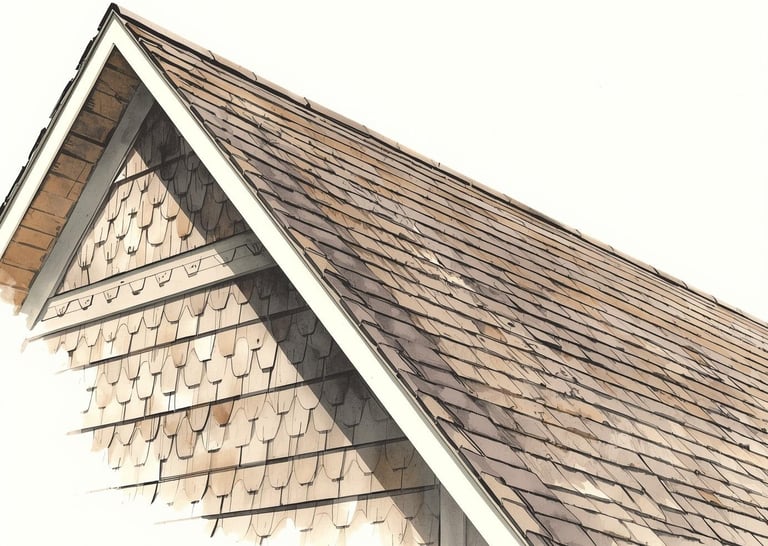
Free roof pitch calculator. Convert roof pitch to degrees, calculate rafter length, ridge height, and total roof area. Estimate shingles, metal panels, and underlayment for gable, hip, and shed roofs. No signup needed.
© 2026 Numovix. All rights reserved.
Calculators Categories
Digital & Tech
Converters Categories