

Profit Margin Calculator | Calculate Gross, Net & Operating Margin | Numovix
Blogs
INTRODUCTION
Revenue is vanity.
Profit is sanity.
Cash flow is reality.
This old business saying is more true than ever.
A business doing $1 million in sales sounds impressive.
But if costs are $950,000, the profit is only $50,000 — a 5% margin.
That is barely surviving.
Another business doing $500,000 in sales with $350,000 in costs?
Profit is $150,000 — a 30% margin.
That is thriving.
Profit margin is the single most important number in business.
It tells you if your pricing works.
If your costs are under control.
If your business model is sustainable.
If you are building wealth or burning cash.
A profit margin calculator reveals this truth instantly.
It shows you exactly how much of every dollar you keep.
Whether you run a coffee shop in Seattle, a tech startup in Bangalore, a manufacturing plant in Germany, or a freelance design business from home — margins determine your survival.
In 2026, with rising labor costs, supply chain pressures, and competitive pricing, understanding your margins is not optional.
It is essential for business survival.
---
WHAT IS A PROFIT MARGIN CALCULATOR?
A profit margin calculator is a tool that breaks down your revenue into clear profit categories.
It does not just show a final number.
It shows you where your money goes and what you actually keep.
Standard inputs:
• Total revenue (sales, fees, subscriptions)
• Cost of goods sold (COGS) (materials, labor directly tied to production)
• Operating expenses (rent, salaries, utilities, marketing, software)
• Interest expenses (loans, credit lines)
• Tax expenses (income tax, sales tax obligations)
• Other income/expenses (investment income, one-time gains/losses)
Outputs you get:
• Gross profit and gross margin
• Operating profit and operating margin
• Net profit and net margin
• Markup percentage (on cost)
• Break-even revenue (where profit = zero)
• Target pricing (to achieve desired margin)
• Industry comparison (how you stack up)
It answers the questions every business owner should ask:
"Am I pricing my products correctly?"
"Where is my money actually going?"
"How much do I need to sell to break even?"
"Is my business actually profitable?"
---
HOW TO USE THE NUMOVIX PROFIT MARGIN CALCULATOR
Our calculator gives you the complete profit picture in under 60 seconds.
Step 1:
Enter your total revenue.
This is all money coming in:
• Product sales
• Service fees
• Subscription revenue
• Licensing income
• Affiliate commissions
Example: $250,000 annual revenue
---
Step 2:
Enter cost of goods sold (COGS).
These are direct costs tied to producing what you sell:
• Raw materials
• Direct labor (factory workers, not office staff)
• Manufacturing overhead
• Shipping to customer
• Packaging
Not COGS: Marketing, rent, software, owner salary, utilities
Example: $100,000 COGS
---
Step 3:
Enter operating expenses.
These are costs to run the business, not make the product:
• Rent or mortgage
• Salaries and wages (office staff, management)
• Marketing and advertising
• Software and subscriptions
• Utilities
• Insurance
• Professional services (accountant, lawyer)
• Depreciation
Example: $80,000 operating expenses
---
Step 4:
Enter interest and tax expenses.
• Loan interest payments
• Credit line interest
• Income tax provision
Example: $5,000 interest, $10,000 taxes
---
Step 5:
Click "Calculate Margins."
You will instantly see:
• Gross profit: Revenue − COGS
• Gross margin: Gross profit ÷ Revenue
• Operating profit: Gross profit − Operating expenses
• Operating margin: Operating profit ÷ Revenue
• Net profit: Operating profit − Interest − Taxes
• Net margin: Net profit ÷ Revenue
• Markup: (Price − Cost) ÷ Cost
• Break-even revenue: Fixed costs ÷ Contribution margin
Pro Tip:
Run the calculator three times:
1. Current numbers — see where you stand
2. With 10% price increase — see margin improvement
3. With 10% cost reduction — see profit boost
Compare the three scenarios.
The results will transform your pricing and cost strategy.
---
THE MATH BEHIND PROFIT MARGINS
Understanding the formulas helps you verify results and make strategic decisions.
---
Gross Profit:
Gross Profit = Revenue − Cost of Goods Sold
Example:
Revenue: $250,000
COGS: $100,000
Gross Profit = $250,000 − $100,000 = $150,000
---
Gross Margin:
Gross Margin = (Gross Profit ÷ Revenue) × 100
Gross Margin = ($150,000 ÷ $250,000) × 100 = 60%
For every $1 in sales, you keep $0.60 after direct production costs.
---
Operating Profit:
Operating Profit = Gross Profit − Operating Expenses
Operating Profit = $150,000 − $80,000 = $70,000
---
Operating Margin:
Operating Margin = (Operating Profit ÷ Revenue) × 100
Operating Margin = ($70,000 ÷ $250,000) × 100 = 28%
For every $1 in sales, you keep $0.28 after all business operating costs.
---
Net Profit:
Net Profit = Operating Profit − Interest − Taxes
Net Profit = $70,000 − $5,000 − $10,000 = $55,000
---
Net Margin:
Net Margin = (Net Profit ÷ Revenue) × 100
Net Margin = ($55,000 ÷ $250,000) × 100 = 22%
For every $1 in sales, your business ultimately keeps $0.22.
This is your bottom line.
---
Markup Calculation:
Markup = (Selling Price − Cost) ÷ Cost × 100
You buy a product for $40 and sell for $100.
Markup = ($100 − $40) ÷ $40 × 100 = 150%
You marked up the cost by 150%.
---
Margin vs Markup — Critical Difference:
| Term | Formula | Example ($40 cost, $100 price) |
| Margin | (Price − Cost) ÷ Price | ($100 − $40) ÷ $100 = 60% |
| Markup | (Price − Cost) ÷ Cost | ($100 − $40) ÷ $40 = 150% |
Many business owners confuse these.
A 50% markup does not equal 50% margin.
A 50% markup on $40 = $60 price = 33% margin.
Always know which number you are using.
---
Break-Even Calculation:
Break-Even Revenue = Fixed Costs ÷ Contribution Margin Ratio
Contribution Margin Ratio = (Revenue − Variable Costs) ÷ Revenue
Example:
Fixed costs: $60,000/year
Variable costs: $100,000 (COGS) on $250,000 revenue
Contribution margin ratio = ($250,000 − $100,000) ÷ $250,000 = 60%
Break-Even = $60,000 ÷ 0.60 = $100,000
You must generate $100,000 in revenue just to cover all costs.
Every dollar above $100,000 is profit.
---
Complete Real Example:
Sarah's Online Boutique:
• Annual revenue: $300,000
• COGS (products + shipping): $120,000
• Operating expenses (rent, staff, marketing): $100,000
• Interest on business loan: $8,000
• Income tax: $15,000
Calculations:
Gross Profit = $300,000 − $120,000 = $180,000
Gross Margin = $180,000 ÷ $300,000 = 60%
Operating Profit = $180,000 − $100,000 = $80,000
Operating Margin = $80,000 ÷ $300,000 = 26.7%
Net Profit = $80,000 − $8,000 − $15,000 = $57,000
Net Margin = $57,000 ÷ $300,000 = 19%
Analysis:
• 60% gross margin is healthy for retail
• 26.7% operating margin shows good cost control
• 19% net margin is solid profitability
Break-even: $108,000 revenue (with $108,000 fixed + variable costs at this ratio)
Sarah is well above break-even and generating meaningful profit.
---
INDUSTRY PROFIT MARGINS 2026
Margins vary dramatically by industry.
Knowing your industry's benchmark helps you evaluate performance.
| Industry | Gross Margin | Operating Margin | Net Margin |
| Software / SaaS | 70-85% | 15-30% | 10-25% |
| E-commerce | 40-60% | 5-15% | 2-8% |
| Restaurants | 60-70% | 5-15% | 3-9% |
| Manufacturing | 25-40% | 8-15% | 5-10% |
| Retail (brick & mortar) | 30-50% | 3-8% | 1-5% |
| Consulting / Services | 50-70% | 20-35% | 15-25% |
| Construction | 20-30% | 5-10% | 3-7% |
| Healthcare | 30-50% | 8-15% | 5-12% |
| Real Estate | 50-70% | 25-40% | 15-30% |
| Freelance / Creative | 60-80% | 40-60% | 30-50% |
Key Insight:
Software and consulting have high margins but may have high customer acquisition costs.
Retail has low margins but can compensate with volume.
Restaurants have decent gross margins but high labor and rent costs squeeze the bottom line.
---
WHY EVERY BUSINESS NEEDS A PROFIT MARGIN CALCULATOR
1. Pricing Decisions
You sell a product for $50 that costs $30 to make.
Gross margin = ($50 − $30) ÷ $50 = 40%
Is 40% enough?
If industry average is 60%, you are underpricing.
If average is 30%, you are competitive.
The calculator shows where you stand.
---
2. Cost Control
Your gross margin dropped from 55% to 45%.
Why?
• Supplier raised prices?
• Shipping costs increased?
• Waste or theft?
• Discounting too heavily?
The calculator highlights problems before they become crises.
---
3. Break-Even Planning
You are launching a new product.
Fixed costs: $50,000/year
Variable costs: 60% of revenue
Break-even = $50,000 ÷ (1 − 0.60) = $125,000
You need $125,000 in sales just to cover costs.
Can your market support that?
The calculator prevents optimistic assumptions.
---
4. Investor and Lender Discussions
Investors ask about margins.
Banks ask about margins.
Healthy margins prove business viability.
The calculator generates the numbers they want to see.
---
5. Growth Planning
You want to double revenue.
But can you handle the costs?
• Will COGS scale efficiently?
• Do you need more staff?
• Larger facility?
• More marketing?
The calculator projects margins at different revenue levels.
---
KEY FACTORS THAT AFFECT PROFIT MARGINS
Pricing Power:
Can you raise prices without losing customers?
Strong brands, unique products, and loyal customers enable higher margins.
Commodity businesses compete on price and suffer thin margins.
---
Cost Structure:
Fixed costs (rent, salaries) do not change with sales.
High fixed costs = high break-even = risky if sales drop.
Variable costs (materials, shipping) scale with sales.
Lower fixed costs = more flexible = safer in downturns.
---
Economies of Scale:
Larger businesses often get:
• Bulk discounts from suppliers
• Lower per-unit shipping costs
• Better advertising rates
• More negotiating power
This improves margins as revenue grows.
---
Competition:
More competitors = pricing pressure = lower margins.
Less competition = pricing power = higher margins.
---
Operational Efficiency:
Lean operations, automation, and waste reduction improve margins without raising prices.
---
COMMON MISTAKES BUSINESS OWNERS MAKE
Mistake 1: Confusing Markup and Margin
"I use 50% markup, so my margin is 50%."
Wrong.
50% markup on $40 cost = $60 price = 33% margin.
Always calculate margin, not just markup.
---
Mistake 2: Ignoring Hidden Costs
You price a product at $100 with $50 COGS.
"50% margin!"
But you forgot:
• Payment processing fees: $3
• Returns and refunds: $5
• Customer service time: $4
• Packaging: $2
True cost: $64
True margin: 36%
Not 50%.
Include all costs.
---
Mistake 3: Competing on Price Alone
Lowering prices to gain market share destroys margins.
A 10% price cut often requires 30-40% volume increase just to maintain profit.
Most businesses cannot achieve that.
The calculator shows the math.
---
Mistake 4: Not Tracking Margins Regularly
You check profit once a year at tax time.
By then, problems have festered for months.
Check margins monthly or quarterly.
Catch issues early.
---
Mistake 5: Growing Revenue Without Growing Profit
"We did $2 million this year!"
But profit was $20,000 — 1% margin.
You built a busy, stressful, low-profit business.
Revenue growth without margin growth is not success.
---
Mistake 6: Underpricing Services
Freelancers and consultants often price by hour without considering:
• Non-billable hours (admin, marketing, learning)
• Benefits they must self-fund
• Business expenses
• Taxes
A $50/hour rate with 50% billable time and $20,000 expenses?
True hourly: approximately $25.
The calculator reveals this reality.
---
PRO TIPS TO IMPROVE PROFIT MARGINS
Tip 1: Raise Prices Strategically
A 5% price increase on $250,000 revenue = $12,500 extra profit (if volume stays same).
Most customers accept small increases if value is clear.
Test on a segment before rolling out fully.
---
Tip 2: Reduce COGS
• Negotiate with suppliers for bulk discounts
• Source from lower-cost regions (quality maintained)
• Reduce waste and defects
• Improve inventory management (less spoilage, less obsolescence)
A 10% COGS reduction on $100,000 = $10,000 straight to profit.
---
Tip 3: Eliminate Low-Margin Products
Analyze every product or service line.
Cut the bottom 20% that drag overall margins down.
Focus energy on high-margin winners.
---
Tip 4: Increase Operational Efficiency
• Automate repetitive tasks
• Reduce manual errors
• Improve employee productivity
• Renegotiate software subscriptions
• Go remote to reduce rent
Every dollar saved in operations drops to the bottom line.
---
Tip 5: Bundle and Upsell
Bundle low-margin and high-margin items together.
Offer premium versions with higher margins.
Upsells and cross-sells improve average transaction value without proportional cost increase.
---
Tip 6: Reduce Customer Acquisition Cost
If it costs $50 to acquire a customer who spends $100 with 30% margin:
Profit = $30 − $50 = −$20
You lose money on every new customer.
Improve marketing efficiency or increase customer lifetime value.
---
Tip 7: Review Monthly, Act Quickly
Set a calendar reminder.
Calculate margins every month.
If gross margin drops 2%, investigate immediately.
Fast action prevents small problems from becoming business-ending crises.
---
QUICK SUMMARY
Before you use the calculator, remember these key points:
• Revenue is vanity, profit is sanity, cash flow is reality
• Gross margin shows production efficiency
• Operating margin shows business management
• Net margin shows ultimate profitability
• Markup and margin are different — always know which you are using
• Break-even analysis prevents catastrophic launch decisions
• Industry benchmarks show if you are competitive or struggling
• Small price increases often create large profit improvements
• Cost reduction directly improves margins without customer friction
• Track margins monthly — not just at tax time
• Cut low-margin offerings and double down on winners
---
FREQUENTLY ASKED QUESTIONS
Q1: What is a good profit margin?
It depends on industry:
• Software: 15-25% net margin is excellent
• Retail: 3-5% net margin is typical
• Restaurants: 5-10% net margin is healthy
• Consulting: 15-25% net margin is standard
• Manufacturing: 5-10% net margin is normal
Compare to industry averages, not arbitrary numbers.
---
Q2: Should I focus on gross margin or net margin?
Both.
Gross margin shows if your pricing and production work.
Net margin shows if your entire business works.
A healthy gross margin with weak net margin means operating costs are too high.
A weak gross margin means pricing or production problems.
---
Q3: How do I calculate break-even for a new product?
Break-Even Units = Fixed Costs ÷ (Price per Unit − Variable Cost per Unit)
Example:
Fixed costs: $10,000
Price: $50
Variable cost: $30
Break-Even = $10,000 ÷ ($50 − $30) = 500 units
You must sell 500 units to cover costs.
Sell 501 and you are profitable.
---
Q4: Why is my net margin lower than competitors?
Possible reasons:
• Higher COGS (supplier costs, inefficiency)
• Higher operating expenses (rent, staff, marketing)
• Lower pricing power (commodity product, intense competition)
• Higher debt costs (interest)
• Tax inefficiency
Use the calculator to isolate which factor hurts you most.
---
Q5: Can I have high revenue and low profit?
Absolutely.
Many businesses do.
High revenue with low profit means:
• Underpricing
• High costs
• Waste
• Scaling without efficiency
This is unsustainable long-term.
Focus on margin, not just top line.
---
Q6: How do taxes affect my margin?
Taxes are calculated on profit, not revenue.
Higher profit = higher tax.
But tax planning can reduce liability:
• Deductible expenses
• Tax credits
• Retirement contributions
• Depreciation
Consult an accountant for optimization.
---
Q7: What is contribution margin and why does it matter?
Contribution Margin = Revenue − Variable Costs
It shows how much each sale contributes to covering fixed costs.
High contribution margin = safer business (easier to cover fixed costs).
Low contribution margin = risky (need massive volume).
---
RELATED CALCULATORS
Explore our full suite of free business tools:
• Break-Even Calculator
• Markup Calculator
• Pricing Calculator
• ROI Calculator
• Cash Flow Calculator
• Business Loan Calculator
• Inventory Turnover Calculator
• Customer Acquisition Cost Calculator
• Lifetime Value Calculator
---
FINAL THOUGHTS
Profit margin is not just a number.
It is a diagnosis.
It tells you if your business is healthy, sick, or dying.
A 2% net margin is a warning.
A 20% net margin is strength.
A negative margin is an emergency.
Most business owners focus on revenue.
They celebrate sales milestones.
They chase growth.
But revenue without margin is just busywork.
Revenue with strong margin is wealth creation.
The profit margin calculator strips away the illusion.
It shows you what is real.
What is working.
What is broken.
What needs to change.
Whether you are starting today or running a $10 million company, the question is the same:
"For every dollar that comes in, how much do I keep?"
If you do not know the answer, you are flying blind.
Run the numbers.
Know your margins.
Fix what is broken.
Protect what works.
Grow what scales.
That is how businesses survive.
That is how businesses thrive.
---
DISCLAIMER
This article is for educational and informational purposes only.
Profit margins, tax obligations, and business regulations vary significantly by industry, location, and change frequently.
The examples provided are illustrative and based on approximate 2026 market conditions.
Actual business performance depends on:
• Market conditions
• Competitive landscape
• Operational execution
• Pricing strategy
• Cost management
• Economic cycles
Always consult a certified public accountant (CPA), business advisor, or financial professional before making major pricing, cost, or strategic decisions.
Numovix does not provide business, tax, or investment advice.
Our calculator results are estimates and should be verified with professional guidance, actual financial statements, and current market data before making any business commitment.
Business decisions carry risk — conduct thorough due diligence and seek professional advice tailored to your specific situation.
Profit Margin Calculator | Calculate Gross, Net & Operating Margin | Numovix
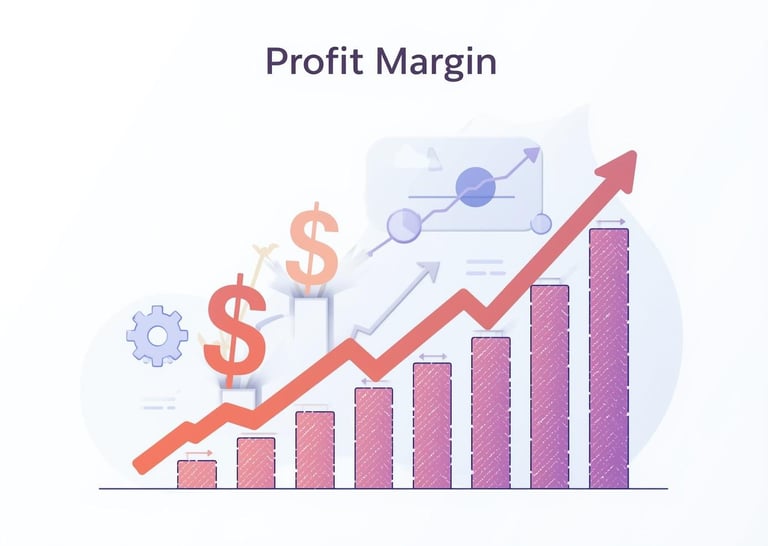
Free profit margin calculator. Calculate gross profit, operating margin, net profit & markup percentage. Compare margins across industries. Plan pricing strategy & improve profitability. No signup needed.
© 2026 Numovix. All rights reserved.
Calculators Categories
Digital & Tech
Converters Categories