

Ovulation Calculator | Calculate Fertile Window, Ovulation Date & Conception | Numovix
INTRODUCTION
Your period was late by 3 days.
You felt a cramp. You checked the app. It said you ovulated on Day 14.
But your cycle is 32 days. Not 28.
The app assumed Day 14 because that is the average. It did not know you.
You ovulated on Day 18. You missed your fertile window entirely.
Another month. Another disappointment.
Or the opposite:
You are trying to avoid pregnancy. The app said "safe day" on Day 10.
You had unprotected sex. Now you are staring at a positive test.
Why? Because sperm live up to 5 days. Day 10 sperm can meet Day 14 egg.
The app treated your cycle like a clock. Your body is not a clock.
Ovulation is not a fixed date. It shifts with stress, sleep, travel, illness, and age.
A 28-day cycle does not mean Day 14 ovulation. It means the luteal phase (after ovulation) is roughly 14 days. Ovulation could be Day 12, Day 16, or Day 20.
The only way to know is to calculate based on your actual cycle length and track your body's signals.
An Ovulation Calculator does not guess. It uses your real data — cycle length, period date, and optional symptoms — to estimate your fertile window with precision.
It tells you:
• When you are most likely to ovulate
• Your 6-day fertile window (5 days before + day of ovulation)
• When to expect your next period
• When to test for pregnancy
• When your safe days begin (if avoiding pregnancy)
In 2026, with fertility apps tracking millions of cycles but accuracy varying wildly, knowing your own ovulation pattern is not optional.
It is essential for every woman trying to conceive, avoiding pregnancy, or simply understanding her body.
---
WHAT IS AN OVULATION CALCULATOR?
An ovulation calculator is a tool that estimates when you release an egg based on your menstrual cycle data.
It uses proven fertility science:
• Calendar Method — Counts backward from your next expected period. The luteal phase is typically 12–16 days.
• Cycle Length Adjustment — Adjusts ovulation date for cycles shorter or longer than 28 days.
• Fertile Window Calculation — Sperm survive 3–5 days; egg survives 12–24 hours. Total fertile window = 6 days.
• Symptom Tracking Integration — Optional inputs for basal body temperature (BBT), cervical mucus, and ovulation predictor kit (OPK) results.
Standard inputs:
• First day of last menstrual period (LMP)
• Average cycle length (days between period starts)
• Cycle regularity (regular, somewhat irregular, very irregular)
• Luteal phase length (optional, if known from BBT tracking)
• BBT rise date (optional, confirms ovulation)
• OPK positive date (optional, predicts ovulation 24–36 hours later)
Outputs you get:
• Ovulation date (estimated)
• Fertile window (6 days: 5 before ovulation + ovulation day)
• Peak fertility days (2 days before ovulation + ovulation day)
• Next period date (estimated)
• Pregnancy test date (earliest accurate test window)
• Safe days (if using fertility awareness for contraception)
• Conception probability by day of fertile window
It answers the questions every woman asks:
"When am I most fertile?"
"Why did I not get pregnant this month?"
"Is it safe to have sex today?"
"When should I take a pregnancy test?"
---
HOW TO USE THE NUMOVIX OVULATION CALCULATOR
Our calculator gives you instant, accurate fertility estimates in under 30 seconds.
Step 1:
Enter the first day of your last menstrual period (LMP).
Example: June 1, 2026
---
Step 2:
Enter your average cycle length.
Example: 30 days (not 28 — your real cycle length)
---
Step 3:
Enter your luteal phase length if known (optional).
Most women: 12–16 days. Default is 14 if unknown.
Example: 14 days
---
Step 4:
Enter any tracking data (optional).
Example: BBT rise on June 17
---
Step 5:
Click "Calculate Ovulation."
You will instantly see:
Example: LMP June 1, 30-day cycle, 14-day luteal phase
• Next period expected: July 1, 2026
• Ovulation date: June 17, 2026 (Day 16 of cycle)
• Fertile window: June 12 – June 17, 2026
• Peak fertility: June 15 – June 17, 2026
• Best days to conceive: June 15 and 16
• Pregnancy test date: June 29, 2026 (12 days post-ovulation)
• Safe days begin: June 18, 2026 (with caution)
---
Example: LMP June 1, 26-day cycle, 14-day luteal phase
• Next period: June 27, 2026
• Ovulation date: June 13, 2026 (Day 12)
• Fertile window: June 8 – June 13, 2026
• Peak fertility: June 11 – June 13, 2026
Shorter cycle = earlier ovulation. The app that assumed Day 14 would have missed it.
---
Example: LMP June 1, 35-day cycle, 15-day luteal phase
• Next period: July 6, 2026
• Ovulation date: June 21, 2026 (Day 20)
• Fertile window: June 16 – June 21, 2026
Longer cycle = much later ovulation. Day 14 assumptions fail completely.
---
THE MATH BEHIND OVULATION CALCULATION
Understanding the formulas helps you verify results and trust your fertile window.
---
Basic Ovulation Formula:
Ovulation Day = Cycle Length − Luteal Phase Length
Example:
Cycle length: 30 days
Luteal phase: 14 days
Ovulation: 30 − 14 = Day 16
---
Fertile Window Calculation:
Fertile Window = (Ovulation Day − 5) to Ovulation Day
Sperm can survive up to 5 days in fertile cervical mucus.
The egg survives 12–24 hours after release.
Total window: 6 days.
Example:
Ovulation: Day 16
Fertile window: Day 11 to Day 16
---
Peak Fertility Days:
Peak = (Ovulation Day − 2) to Ovulation Day
The 2 days before ovulation have the highest conception probability.
Example:
Ovulation: Day 16
Peak fertility: Day 14 and Day 15
---
Next Period Prediction:
Next Period = LMP + Cycle Length
Example:
LMP: June 1
Cycle: 30 days
Next period: July 1
---
Pregnancy Test Timing:
Earliest test: 10–12 days after ovulation
HCG (pregnancy hormone) rises after implantation (6–12 days post-ovulation).
Testing too early gives false negatives.
Example:
Ovulation: June 17
Test: June 27–29
---
Conception Probability by Day:
| Day Relative to Ovulation | Conception Probability | Why |
| Day −5 | ~10% | Sperm present, egg not yet released |
| Day −4 | ~15% | Sperm waiting, egg approaching |
| Day −3 | ~20% | Rising estrogen, fertile mucus |
| Day −2 | ~30% | Peak fertility, sperm ready |
| Day −1 | ~35% | Highest probability, egg imminent |
| Ovulation Day | ~25% | Egg released, 12–24 hour window |
| Day +1 | ~5% | Egg aging, window closing |
| Day +2+ | ~0% | Egg gone, not viable |
---
Complete Real Example:
Ananya's Conception Journey:
Cycle 1: Using a Generic App
• LMP: May 1
• App assumes: 28-day cycle, Day 14 ovulation
• App says fertile window: May 11–16
Ananya and her partner try May 12, 14, 16.
Her real cycle: 32 days. Real ovulation: Day 18 (May 18).
They missed the window. She does not conceive.
---
Cycle 2: Using the Calculator
Ananya enters her real data:
• LMP: June 1
• Cycle length: 32 days
• Luteal phase: 14 days (confirmed by BBT)
Calculator:
• Ovulation: June 19 (Day 18)
• Fertile window: June 14–19
• Peak fertility: June 17–19
They try June 17, 18, 19.
She conceives.
---
Cycle 3: If Avoiding Pregnancy
Ananya uses the calculator for natural family planning.
• LMP: July 1
• Cycle: 32 days
• Ovulation: July 19
Fertile window: July 14–19 (avoid unprotected sex)
Safe days: July 20 onward (with 3-day buffer for safety)
She uses condoms July 14–22. Unprotected sex after July 23.
Note: Natural family planning has a 24% failure rate with typical use. Calculator assists but does not guarantee.
---
CYCLE LENGTHS AND OVULATION TIMING
| Cycle Length | Typical Ovulation Day | Fertile Window Starts | Fertile Window Ends |
| 21 days | Day 7 | Day 2 | Day 7 |
| 24 days | Day 10 | Day 5 | Day 10 |
| 26 days | Day 12 | Day 7 | Day 12 |
| 28 days | Day 14 | Day 9 | Day 14 |
| 30 days | Day 16 | Day 11 | Day 16 |
| 32 days | Day 18 | Day 13 | Day 18 |
| 35 days | Day 21 | Day 16 | Day 21 |
---
WHY EVERY WOMAN NEEDS AN OVULATION CALCULATOR
1. Conceive Faster
Couples having timed intercourse in the fertile window conceive in 3 months on average.
Couples having random sex conceive in 6–12 months on average.
The calculator tells you exactly which 3 days matter most.
---
2. Understand Your Cycle
"I ovulate on Day 14."
No. You might ovulate on Day 12. Or Day 20. Or different months vary.
Tracking 3 cycles with the calculator reveals your real pattern.
---
3. Avoid Pregnancy Naturally
If avoiding hormonal contraception, fertility awareness requires knowing your window.
The calculator identifies unsafe days. You use barriers or abstain.
Failure rate: 2% with perfect use, 24% with typical use. The calculator improves accuracy.
---
4. Explain Irregular Periods
Cycle 1: 28 days. Cycle 2: 35 days. Cycle 3: 26 days.
The calculator shows ovulation shifted: Day 14, Day 21, Day 12.
Not random. Responsive to stress, travel, illness, weight change.
Data reveals patterns. Patterns reveal health.
---
5. Time Pregnancy Tests
Testing on Day 28 of a 35-day cycle? Too early. Wasted money. False negative anxiety.
Testing on Day 35? Appropriate.
Calculator tells you exactly when to test based on your ovulation date, not a generic calendar.
---
KEY FACTORS THAT AFFECT OVULATION
Cycle Length Variability:
Stress, travel, illness, weight change, and exercise can shift ovulation by days or weeks.
One month: 28 days. Next month: 34 days.
The calculator adjusts. But tracking BBT or OPKs confirms the real date.
---
Age:
Fertility peaks in the 20s.
Declines gradually after 30.
Accelerates after 35.
Ovulation may become irregular. Luteal phase may shorten.
Calculator estimates become less reliable. Medical consultation recommended if trying to conceive after 35.
---
Hormonal Conditions:
PCOS: Irregular or absent ovulation. Calculator may not apply.
Endometriosis: Painful cycles, possible ovulation disruption.
Thyroid disorders: Can lengthen or shorten cycles significantly.
Calculator is a tool, not a diagnosis. See a doctor for irregular cycles.
---
Medications:
Hormonal birth control: Suppresses ovulation. Calculator does not apply.
Emergency contraception: Delays ovulation. Calculator resets after next period.
Fertility drugs (Clomid, Letrozole): Induce ovulation. Calculator assists timing.
---
Breastfeeding:
Prolactin suppresses ovulation. But not perfectly.
Ovulation can return before first postpartum period.
Calculator requires a period to start. Use backup contraception while breastfeeding.
---
Travel and Jet Lag:
Crossing time zones disrupts circadian rhythms. Ovulation may delay 2–7 days.
Recalculate after travel. Do not rely on pre-trip estimates.
---
COMMON MISTAKES WOMEN MAKE
Mistake 1: Assuming Day 14 Ovulation
The "Day 14 myth" kills fertility plans.
Only women with exact 28-day cycles ovulate on Day 14.
A 30-day cycle ovulates Day 16. A 24-day cycle ovulates Day 10.
Use your real cycle length. Always.
---
Mistake 2: Using Apps That Ignore Cycle Length
Many apps default to 28 days. They do not ask your real length.
You enter period dates. They assume Day 14.
Switch to a calculator that uses your actual data.
---
Mistake 3: Testing for Pregnancy Too Early
You ovulated on Day 18. You test on Day 26.
HCG is not yet detectable. Negative result. You are devastated.
Wait 12–14 days after ovulation. Test then.
---
Mistake 4: Having Sex Only on Ovulation Day
Egg lives 12–24 hours. Sperm live 3–5 days.
Sex on ovulation day is good. But sex 2 days before is better (sperm waiting).
The calculator identifies the full 6-day window. Use it all.
---
Mistake 5: Ignoring Cervical Mucus Signs
Fertile mucus — clear, stretchy, egg-white texture — signals estrogen rise.
It appears 2–3 days before ovulation. Confirms the calculator's window.
Track mucus. It is free and accurate.
---
Mistake 6: Relying on Calendar Alone for Contraception
"I am safe on Day 8."
Sperm from Day 8 sex live until Day 13. You ovulate Day 12. You conceive.
Natural family planning requires multiple signals: calendar, mucus, BBT, abstinence during window.
Calculator is one tool. Not enough alone.
---
Mistake 7: Not Tracking Multiple Cycles
One cycle tells you this month.
Three cycles reveal your pattern.
Six cycles show your consistency.
Track. Learn. Adjust.
---
PRO TIPS FOR TRACKING OVULATION
Tip 1: Measure Basal Body Temperature (BBT)
Take temperature first thing in morning, before moving.
A rise of 0.3–0.5°F (0.2–0.3°C) confirms ovulation happened 1–2 days prior.
BBT does not predict ovulation. It confirms it.
Use with calculator to verify estimates.
---
Tip 2: Use Ovulation Predictor Kits (OPKs)
Detect LH surge 24–36 hours before ovulation.
Positive OPK = ovulation tomorrow.
Best timing: Have sex day of positive and next day.
---
Tip 3: Track Cervical Mucus Daily
Fertile mucus: Clear, stretchy, lubricative.
Non-fertile: Thick, sticky, dry.
Mucus confirms estrogen rise. It is free and highly accurate.
---
Tip 4: Have Sex Every 2–3 Days Throughout Cycle
If unsure of ovulation, regular intercourse covers all bases.
Sperm quality is best with 2–3 day intervals.
Daily sex can reduce sperm count slightly.
---
Tip 5: Start Prenatal Vitamins Before Conception
Folic acid (400–800 mcg) prevents neural tube defects.
Start 1–3 months before trying to conceive.
---
Tip 6: Reduce Stress
Cortisol disrupts ovulation. Meditation, sleep, and exercise help.
But excessive exercise (marathon training) can also suppress ovulation.
Balance matters.
---
Tip 7: See a Doctor After 6–12 Months
Under 35: Try 12 months before fertility evaluation.
Over 35: Try 6 months.
PCOS, endometriosis, thyroid issues, and male factor infertility are common and treatable.
---
QUICK SUMMARY
Before you use the calculator, remember these key points:
• Ovulation typically occurs 12–16 days before your next period, not on Day 14
• The luteal phase is relatively constant (12–16 days) while the follicular phase varies
• Your fertile window is 6 days — 5 days before ovulation plus ovulation day
• Peak fertility is the 2 days before ovulation — sperm waiting beats egg chasing
• Sperm live 3–5 days in fertile cervical mucus; the egg lives only 12–24 hours
• Cycle length matters — a 32-day cycle ovulates around Day 18, not Day 14
• BBT confirms ovulation after it happens; OPKs predict it 24–36 hours before
• Cervical mucus is a free, accurate fertility signal — learn to read it
• Test for pregnancy 12–14 days after ovulation, not based on generic cycle day
• Stress, travel, illness, and weight change can shift ovulation by days
• Track at least 3 cycles to identify your personal pattern
• Natural family planning requires multiple signals — calendar alone is not enough
---
FREQUENTLY ASKED QUESTIONS
Q1: How do I calculate my ovulation date?
Ovulation Day = Cycle Length − Luteal Phase Length
If unknown, assume 14-day luteal phase.
Example: 30-day cycle = Day 16 ovulation.
Example: 26-day cycle = Day 12 ovulation.
Use the calculator for automatic calculation.
---
Q2: What is the fertile window?
The 6-day period ending on ovulation day.
Days −5 to 0 relative to ovulation.
Sperm survive up to 5 days. Egg survives 12–24 hours.
Sex on any of these 6 days can result in pregnancy.
---
Q3: Can I get pregnant if I have sex before ovulation?
Yes. In fact, it is more likely.
Sperm from Day −3 or Day −2 sex wait in the reproductive tract.
They meet the egg immediately upon release.
Sex on ovulation day is good. Sex 1–2 days before is best.
---
Q4: Why do apps say Day 14 when my cycle is 32 days?
Many apps use the 28-day standard and assume Day 14.
They do not adjust for your actual cycle length.
Always use a calculator that asks for your real cycle length.
---
Q5: How accurate is ovulation calculation?
Calendar method: ~80% accurate for regular cycles.
With BBT confirmation: ~90% accurate.
With OPK + mucus: ~95% accurate.
Irregular cycles reduce accuracy. Medical consultation recommended.
---
Q6: Can I use ovulation tracking for birth control?
Yes, but with caution.
Fertility Awareness Method (FAM) has:
• 2% failure rate with perfect use
• 24% failure rate with typical use
Requires multiple signals: calendar, mucus, BBT, abstinence/condoms during window.
Calculator assists but is not sufficient alone.
---
Q7: What if my cycles are irregular?
Irregular cycles (varying by >7 days month to month) suggest:
• PCOS
• Thyroid issues
• Stress or weight fluctuation
• Perimenopause
See a doctor. Calculator estimates will be unreliable.
Track anyway. Patterns may emerge.
---
RELATED CALCULATORS
Explore our full suite of free health and fertility tools:
• Pregnancy Due Date Calculator
• Implantation Calculator
• Fertility Calculator
• Period Tracker
• Conception Calculator
• Pregnancy Test Calculator
• BMI Calculator
• Body Fat Percentage Calculator
• Water Intake Calculator
---
FINAL THOUGHTS
Your body is not a calendar.
It does not ovulate on command. It does not menstruate like clockwork.
Stress delays it. Sleep restores it. Travel confuses it. Age changes it.
The Ovulation Calculator does not control your cycle.
It listens to it.
It takes your real data — your actual period, your real cycle length, your confirmed signals — and translates it into actionable dates.
It tells you when to try.
It tells you when to wait.
It tells you when to test.
It tells you when to see a doctor.
Before you spend another month guessing, calculate.
Before you blame yourself for not conceiving, calculate.
Before you rely on an app that treats every woman like Day 14, calculate.
Your cycle is unique. Your fertility is personal. Your timing matters.
Know your body. Track your data. Use the calculator.
That is how you conceive faster.
That is how you avoid surprises.
That is how you understand the rhythm that runs your life.
---
DISCLAIMER
This article is for educational and informational purposes only.
Ovulation calculations, fertile window estimates, and fertility predictions are based on average cycle patterns and may not apply to all individuals.
The examples provided are illustrative and based on standard reproductive physiology.
Actual ovulation depends on:
• Individual hormonal patterns
• Stress, illness, travel, and lifestyle factors
• Age and ovarian reserve
• Medical conditions (PCOS, endometriosis, thyroid disorders)
• Medications and contraceptive use
Never use ovulation calculation as the sole method of contraception unless properly trained in Fertility Awareness Method with multiple tracking signals.
Always consult a qualified healthcare provider, OB-GYN, or reproductive endocrinologist for fertility concerns, irregular cycles, or pregnancy planning.
Numovix does not provide medical advice, diagnosis, or treatment.
Our calculator results are estimates and should not replace professional medical guidance or fertility evaluation.
If you have been trying to conceive for 6–12 months without success (or 6 months if over 35), consult a fertility specialist.
Ovulation Calculator | Calculate Fertile Window, Ovulation Date & Conception | Numovix
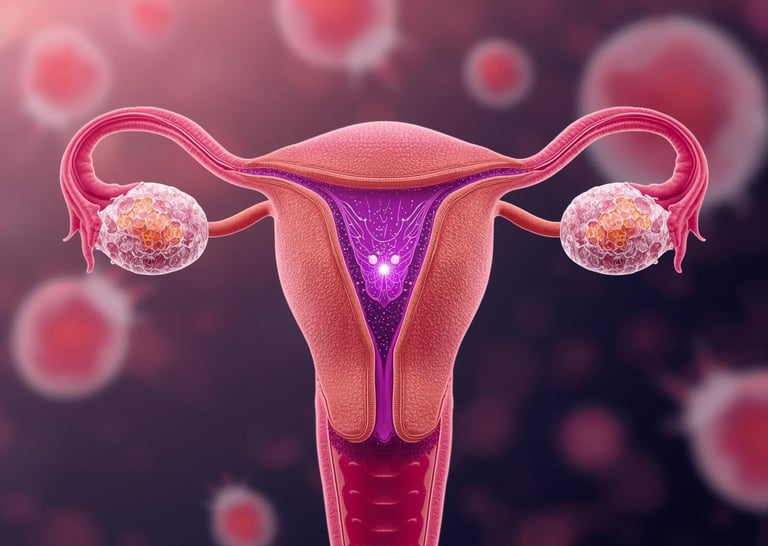
Free ovulation calculator. Calculate your ovulation date, fertile window, and next period date instantly. Track your cycle, plan conception, or avoid pregnancy naturally. No signup needed.
© 2026 Numovix. All rights reserved.
Calculators Categories
Digital & Tech
Converters Categories