

Logarithm Calculator
INTRODUCTION
You calculated the compound interest by hand.
You felt smart. You felt independent. You felt like the formula A = P(1 + r/n)^(nt) was simple enough — just plug in 8% annual return, monthly compounding, 25 years.
You wrote it on a napkin at the coffee shop. P = $10,000. r = 0.08. n = 12. t = 25.
You multiplied. You exponentiated. You got $73,106. You felt rich. You posted it. You planned your early retirement.
Your friend opened a real brokerage calculator. She entered the same numbers. Her screen showed $73,106.17. You matched to the dollar. You celebrated.
Then the market corrected. Your actual 10-year return was 4.2%, not 8%. You needed to know: how many years at 4.2% to reach that same $73,106?
You rearranged the formula. You needed to solve for t. You had:
73,106 = 10,000 × (1 + 0.042/12)^(12t)
You divided: 7.3106 = (1.0035)^(12t)
You stared at it. You could not isolate t. The variable was trapped in the exponent. You tried to "bring down" the 12t by dividing both sides by 12. That destroyed the equation. You tried to take the 12th root of 7.3106. You got 1.186. You had no idea what to do with it.
You gave up. You guessed 15 years. You guessed 20. You opened a retirement calculator. It said 40.3 years. Your heart sank. At 4.2%, your dream retirement was not 25 years away. It was 40 years away. You would be 72.
You blamed the market. "Manipulated by hedge funds."
But the real problem was the number.
You never understood logarithms. It did not know that log_b(x) = y means b^y = x. It did not know that to solve for t in an exponential, you must take the logarithm of both sides. It did not know that ln(7.3106) / ln(1.0035) = 12t, and t = 555.6 / 12 = 46.3 years — even worse than the calculator's estimate because you forgot the monthly compounding in the logarithm step.
Logarithms are not a math class curiosity. They are the inverse of exponential growth. And exponential growth governs everything that compounds, decays, amplifies, or dampens.
Without logarithms, you cannot solve for time in compound interest. You cannot calculate pH from hydrogen ion concentration. You cannot convert decibels to power ratios. You cannot determine radioactive half-life. You cannot measure earthquake magnitude. You cannot compute information entropy. You cannot invert a sigmoid function in machine learning.
A Logarithm Calculator finds that exponent. It solves what power raises the base to the target. It turns intractable exponential equations into simple division.
In 2026, with crypto APYs compounding by the block, climate models running exponential decay simulations, and neural network loss functions using logarithmic cross-entropy, knowing your logarithms is not optional.
It is essential for every investor, scientist, engineer, student, and anyone who encounters a variable trapped in an exponent.
---
WHAT IS A LOGARITHM CALCULATOR?
A Logarithm Calculator is a tool that computes the logarithm of a number to any base, and solves equations where the unknown appears in an exponent.
It uses fundamental mathematical identities and numerical methods:
• Definition: log_b(x) = y ⟺ b^y = x
• Natural Logarithm (ln): Base e ≈ 2.71828. Used in calculus, physics, continuous growth
• Common Logarithm (log₁₀): Base 10. Used in pH, decibels, orders of magnitude
• Binary Logarithm (log₂): Base 2. Used in information theory, computer science, algorithm complexity
• Change of Base Formula: log_b(x) = log_k(x) / log_k(b) for any base k
• Logarithmic Identities: Product, quotient, power, and root rules
Standard inputs:
• Number (x) — the value you want the logarithm of (must be > 0)
• Base (b) — any positive number ≠ 1 (e, 10, 2, or custom)
• Calculation mode — single log, solve for exponent, or equation solver
• Precision — decimal places for output
Outputs you get:
• log_b(x) — the exact logarithm value
• Step-by-step solution showing change of base if needed
• Equivalent exponential form (b^y = x)
• ln(x) and log₁₀(x) for cross-reference
• Antilogarithm (inverse: b^x) for verification
• Graphical representation of the logarithmic curve
It answers the questions every student and professional asks:
"How do I solve for t when it is in the exponent?"
"What is the pH of 2.5 × 10⁻⁵ M HCl?"
"How many half-lives until 1% of a radioactive sample remains?"
"What block height gives 5% APY in this DeFi protocol?"
---
HOW TO USE THE NUMOVIX LOGARITHM CALCULATOR
Our calculator gives you instant, accurate logarithmic computation in under 30 seconds.
Step 1:
Select your logarithm type or enter custom base.
Example: Solve for exponent in compound interest
---
Step 2:
Enter your equation or values.
Example:
• Final amount A = $73,106
• Principal P = $10,000
• Rate r = 4.2% (0.042)
• Compounding n = 12 (monthly)
---
Step 3:
Click "Calculate."
You will instantly see:
Example: Compound Interest — Solve for Time
---
Equation Setup:
A = P(1 + r/n)^(nt)
73,106 = 10,000 × (1 + 0.042/12)^(12t)
---
Step-by-Step Solution:
| Step | Operation | Result |
| 1 | Divide both sides by P | 7.3106 = (1.0035)^(12t) |
| 2 | Take natural log of both sides | ln(7.3106) = 12t × ln(1.0035) |
| 3 | Calculate ln values | 1.9889 = 12t × 0.003494 |
| 4 | Isolate t | t = 1.9889 / (12 × 0.003494) |
| 5 | Final calculation | t = 47.43 years |
---
Key Numbers:
• At 8%: 25 years → $73,106
• At 4.2%: 47.4 years → $73,106
• **Time penalty for lower return:** 22.4 extra years
• Monthly compounding matters: Using annual compounding gives 45.1 years — a 2.3-year error
---
Example: pH Calculation
| Parameter | Value |
| [H⁺] concentration | 2.5 × 10⁻⁵ M |
| pH = −log₁₀[H⁺] | −log₁₀(2.5 × 10⁻⁵) |
| Step 1 | −(log₁₀(2.5) + log₁₀(10⁻⁵)) |
| Step 2 | −(0.3979 − 5) |
| Step 3 | −(−4.6021) |
| pH | 4.60 |
---
Example: Decibels — Power Ratio
| Parameter | Value |
| Output power | 50 watts |
| Input power | 0.001 watt (1 mW) |
| dB = 10 × log₁₀(P_out/P_in) | 10 × log₁₀(50,000) |
| log₁₀(50,000) | 4.6990 |
| dB | 46.99 dB |
---
THE MATH BEHIND LOGARITHM CALCULATION
Understanding the formulas helps you verify results and solve any exponential problem.
---
Definition:
log_b(x) = y means b^y = x
Where:
• b = base (b > 0, b ≠ 1)
• x = argument (x > 0)
• y = logarithm (the exponent)
---
Change of Base Formula:
log_b(x) = ln(x) / ln(b) = log₁₀(x) / log₁₀(b) = log₂(x) / log₂(b)
This is how calculators compute any base — they convert to natural log or common log internally.
Example: log₅(125) = ln(125) / ln(5) = 4.8283 / 1.6094 = 3
Verification: 5³ = 125 ✓
---
Key Logarithmic Identities:
| Identity | Formula | Example |
| Product | log_b(xy) = log_b(x) + log_b(y) | log(100×1000) = 2 + 3 = 5 |
| Quotient | log_b(x/y) = log_b(x) − log_b(y) | log(1000/10) = 3 − 1 = 2 |
| Power | log_b(x^p) = p × log_b(x) | log(10⁵) = 5 × log(10) = 5 |
| Root | log_b(ᵖ√x) = log_b(x) / p | log(√1000) = 3/2 = 1.5 |
| Reciprocal | log_b(1/x) = −log_b(x) | log(1/100) = −2 |
| Base swap | log_b(x) = 1 / log_x(b) | log₂(8) = 1/log₈(2) = 3 |
---
Solving Exponential Equations:
General form: a × b^(ct) = d
Solution:
1. Divide by a: b^(ct) = d/a
2. Take log_b of both sides: ct = log_b(d/a)
3. Divide by c: t = log_b(d/a) / c
Or using natural log:
t = ln(d/a) / (c × ln(b))
---
Natural Logarithm (ln) and e:
e ≈ 2.718281828...
ln(x) is the inverse of e^x.
Key values:
• ln(1) = 0
• ln(e) = 1
• ln(1/e) = −1
• ln(2) ≈ 0.6931
• ln(10) ≈ 2.3026
---
Complete Real Example:
Ananya's Crypto Yield Farming Mistake:
Starting Point:
• Investment: $5,000 in a DeFi liquidity pool
• Advertised APY: 12% compounded per block (every 12 seconds)
• Ananya's goal: $20,000 (4× return)
• Her manual calculation: "12% per year. 4× takes about 12 years by rule of 72."
---
Month 1: The Guess Approach
Ananya stakes $5,000. The protocol auto-compounds every block.
She checks after 1 month: $5,051. "Slow, but compounding."
After 6 months: $5,318. "This is not 12% APY. This is 6%."
She blames the protocol. "Rug pull. Emissions diluted."
She withdraws. She checks the math on a napkin:
"12% APY. $5,000 × 1.12 = $5,600 after year 1. Year 2: $6,272. Year 5: $8,811. Year 10: $15,530. Year 12: $19,480. Close to 4×."
But the protocol compounds every 12 seconds, not annually.
She never calculated the effective rate. She never solved for time with continuous compounding.
---
Month 2: Discovers the Calculator
Ananya uses the Numovix Logarithm Calculator.
Correct Setup:
• Compounding: Every block (12 seconds)
• Blocks per year: 2,628,000
• Rate per block: 0.12 / 2,628,000 = 0.00000004566
• Formula: A = P(1 + r/n)^(nt)
But with per-block compounding, this is effectively:
A = P × e^(rt) for continuous, or precise discrete:
20,000 = 5,000 × (1 + 0.12/2,628,000)^(2,628,000 × t)
Using natural log:
4 = (1 + 4.566×10⁻⁸)^(2,628,000t)
ln(4) = 2,628,000t × ln(1.00000004566)
1.3863 = 2,628,000t × 4.566×10⁻⁸
1.3863 = 0.12t
t = 11.55 years
She realizes:
• Her napkin math was almost correct for annual compounding. 11.55 years vs. her guess of 12.
• But the protocol compounds per block. The effective APY is actually higher than 12% nominal because of the compounding frequency.
• The real issue: She expected visible growth in 6 months. At 12% APY, 6 months yields only 6% simple, ~5.9% compounded. $5,000 → $5,295. She saw $5,318 — actually slightly above target.
• Her panic withdrawal cost her gas fees, slippage, and opportunity cost. She mistook normal exponential growth for a scam because she could not verify the math.
---
New Approach:
Ananya creates a spreadsheet using the calculator's formulas.
Verification Table:
| Time | Annual Compounding | Per-Block Compounding | Difference |
| 1 year | $5,600 | $5,601.27 | +$1.27 |
| 5 years | $8,811 | $8,831.47 | +$20.47 |
| 10 years | $15,530 | $15,601.27 | +$71.27 |
| 11.55 years | $19,480 | $20,000 | — |
The per-block compounding is slightly better, but the difference is negligible for her goals.
She restakes. She sets calendar reminders. She ignores 6-month fluctuations.
Results after 12 years:
• Portfolio value: $20,158
• She withdraws at her target
• Total gain: $15,158 (303%)
She learned that exponential patience requires logarithmic verification.
---
LOGARITHM APPLICATIONS BY FIELD
| Field | Application | Log Base Used | Example |
| Chemistry (pH) | Acidity measurement | 10 | pH = −log₁₀[H⁺] |
| Physics (Decibels) | Sound intensity | 10 | dB = 10 log₁₀(I/I₀) |
| Physics (Richter) | Earthquake magnitude | 10 | M = log₁₀(A) − log₁₀(A₀) |
| Nuclear (Half-life) | Radioactive decay | 2 or e | t½ = ln(2)/λ |
| Finance (Compound Interest) | Time to target | e or 10 | t = ln(A/P)/(n×ln(1+r/n)) |
| Biology (Growth) | Population doubling | 2 | Generations = log₂(N_final/N_initial) |
| Computer Science | Algorithm complexity | 2 | O(log n) for binary search |
| Information Theory | Entropy, data compression | 2 | H = −Σ p(x) log₂ p(x) |
| Machine Learning | Cross-entropy loss | e | L = −Σ y log(ŷ) |
| Astronomy | Apparent magnitude | 10 | m = −2.5 log₁₀(F/F₀) |
| Music | Cents (pitch interval) | 2 | cents = 1200 × log₂(f₂/f₁) |
---
WHY EVERY STUDENT AND PROFESSIONAL NEEDS A LOGARITHM CALCULATOR
1. Solve for Time in Any Exponential Growth Problem
Population, investment, bacteria, viral spread — if it grows exponentially, logarithms isolate time.
Without them, you are stuck guessing.
---
2. Convert Between Orders of Magnitude
The universe is 10²⁶ meters wide. A proton is 10⁻¹⁵ meters wide.
Logarithms compress this 41-order range into manageable numbers.
---
3. Calculate pH, pOH, and pKa Instantly
pH = −log₁₀[H⁺]. No log, no pH.
The calculator turns concentration into acidity in one step.
---
4. Determine Half-Life and Decay Rates
Carbon dating, drug elimination, capacitor discharge — all use ln(2)/λ.
The calculator computes this without error-prone manual steps.
---
5. Evaluate Algorithm Efficiency
Binary search is O(log n). A database with 1 billion rows needs 30 comparisons, not 500 million.
The calculator shows why logarithmic algorithms scale infinitely.
---
6. Compute Information Entropy
How compressible is a file? Shannon entropy uses −Σ p log₂ p.
The calculator handles the summation and logarithm for probability distributions.
---
7. Understand Why Your Investment Doubles Slowly at Low Rates
Rule of 72: Years to double ≈ 72 / interest rate.
At 2%: 36 years. At 8%: 9 years.
The calculator derives this from ln(2)/ln(1+r) precisely.
---
KEY FACTORS THAT AFFECT LOGARITHM CALCULATIONS
Domain Restrictions:
• x must be > 0. log(−5) is undefined in real numbers.
• b must be > 0 and ≠ 1. log₁(5) and log(−2)(5) are undefined.
The calculator validates inputs and explains domain errors.
---
Base Selection:
• e (ln): Natural growth, calculus, physics. The base of continuous processes.
• 10 (log): Human-scale orders of magnitude, pH, decibels, engineering.
• 2 (lb): Computer science, information theory, binary systems.
The calculator converts seamlessly between all bases.
---
Precision and Rounding:
Logarithms of irrational numbers (ln(2), log₁₀(3)) are infinite decimals.
The calculator carries 15+ digits internally and rounds to your specified precision.
For financial calculations, 4 decimal places are usually sufficient. For scientific, 6–8.
---
Compound Frequency:
Annual, monthly, daily, continuous — each changes the effective rate.
The calculator handles all frequencies and shows the difference.
---
Sign Conventions:
• log(x) where 0 < x < 1 → negative (e.g., log(0.01) = −2)
• log(x) where x > 1 → positive
• log(1) = 0 for any base
Students often miss the negative sign for fractions, leading to inverted answers.
---
COMMON MISTAKES PEOPLE MAKE
Mistake 1: Dividing by the Exponent Instead of Taking the Log
You have: 2^x = 64
Wrong: x = 64 / 2 = 32
Right: x = log₂(64) = 6
Exponentiation is not multiplication. You cannot divide it away.
---
Mistake 2: Forgetting the Log Applies to the Entire Side
You have: log(x + 3) = 2
Wrong: log(x) + log(3) = 2
Right: x + 3 = 10² = 100, so x = 97
Log of a sum is NOT the sum of logs. log(a + b) ≠ log(a) + log(b).
---
Mistake 3: Using Wrong Base for pH
pH uses base 10. Some students use ln and get answers off by a factor of 2.3.
pH = −log₁₀[H⁺]. Not −ln[H⁺].
---
Mistake 4: Confusing log_b(x) with b^x
log₁₀(100) = 2 (the exponent)
10² = 100 (the power)
They are inverses, not the same operation.
---
Mistake 5: Ignoring Continuous Compounding
A = Pe^(rt) uses ln. A = P(1 + r/n)^(nt) uses log with base (1 + r/n).
Using the wrong formula gives years of error.
---
Mistake 6: Sign Errors with Negative Logs
log(0.001) = −3
Students write 3, then get pH = 3 instead of pH = 3 (wait, that one is correct).
But log(0.00001) = −5. If you miss the negative: pH = 5 instead of 5... actually that is also correct.
Better example: [H⁺] = 2 × 10⁻⁸. log(2 × 10⁻⁸) = log(2) + log(10⁻⁸) = 0.3010 − 8 = −7.699. pH = 7.70. If you forget the negative: pH = 8.30. Wrong by 0.6 units — a 4× error in acidity.
---
Mistake 7: Applying Log Rules to Non-Log Expressions
You see: (x + y)² and think log(x + y)² = 2 log(x + y)
That is correct. But you cannot distribute: log(x² + y²) ≠ 2 log(x) + 2 log(y).
Log rules apply only to products, quotients, and powers — not sums inside the argument.
---
PRO TIPS TO USE LOGARITHMS EFFECTIVELY
Tip 1: Always Verify by Exponentiation
If log₅(125) = 3, check: 5³ = 125 ✓
If your answer seems wrong, plug it back in.
---
Tip 2: Use Natural Log for Calculus, Base 10 for Applications
ln dominates calculus because d/dx(ln x) = 1/x is elegant.
log₁₀ dominates engineering because we count in tens.
Match your base to your field.
---
Tip 3: Memorize Key Values
| log₂(2) = 1 | ln(e) = 1 | log₁₀(10) = 1 |
| log₂(4) = 2 | ln(1) = 0 | log₁₀(100) = 2 |
| log₂(8) = 3 | ln(2) ≈ 0.693 | log₁₀(1000) = 3 |
| log₂(16) = 4 | ln(10) ≈ 2.303 | log₁₀(0.1) = −1 |
| log₂(32) = 5 | ln(0.5) ≈ −0.693 | log₁₀(0.01) = −2 |
These speed mental estimation.
---
Tip 4: Use the Calculator for Change of Base
Do not memorize log₇(49). Use the calculator: ln(49)/ln(7) = 2.
For odd bases, this is the only practical method.
---
Tip 5: Graph Logarithmic Functions
y = log(x) grows slowly. y = ln(x) grows slightly faster. y = log₀.₅(x) decreases.
Visualizing the curve prevents sign errors and magnitude mistakes.
---
Tip 6: Apply Logarithms to Linearize Data
If y = a × b^x, then log(y) = log(a) + x log(b).
This is a straight line on semi-log paper. Slope = log(b). Intercept = log(a).
The calculator helps you extract parameters from exponential data.
---
Tip 7: Use in Machine Learning Loss Functions
Cross-entropy loss: L = −Σ y_i log(ŷ_i)
When ŷ_i is near 0, log(ŷ_i) → −∞. The loss explodes.
The calculator helps you understand why numerical stability (clipping probabilities) matters.
---
QUICK SUMMARY
Before you use the calculator, remember these key points:
• log_b(x) = y means b^y = x — the logarithm IS the exponent
• Change of base: log_b(x) = ln(x)/ln(b) — use this for any non-standard base
• ln(x) is natural log (base e) — used in calculus and continuous growth
• log(x) usually means log₁₀(x) — used in pH, decibels, and orders of magnitude
• To solve for an exponent: take the log of both sides — then divide by the coefficient
• log(xy) = log(x) + log(y) — product becomes sum
• log(x/y) = log(x) − log(y) — quotient becomes difference
• log(x^p) = p × log(x) — power comes down as multiplier
• Domain: x > 0, b > 0, b ≠ 1 — violating this gives undefined results
• Continuous compounding uses e and ln — discrete compounding uses (1 + r/n) and log
• Half-life: t½ = ln(2)/λ — memorize this for all decay problems
• Rule of 72: doubling time ≈ 72 / rate% — derived from ln(2) ≈ 0.693
• pH = −log₁₀[H⁺] — base 10, not natural log
• Always verify by exponentiation — plug your answer back into the original equation
---
FREQUENTLY ASKED QUESTIONS
Q1: What is the difference between ln and log?
ln(x) = log_e(x) = natural logarithm, base e ≈ 2.718. Used in calculus, physics, continuous growth.
log(x) = log₁₀(x) = common logarithm, base 10. Used in engineering, pH, decibels, orders of magnitude.
In computer science, log sometimes means log₂. Always specify the base.
---
Q2: Can I take the logarithm of a negative number?
Not in real numbers. The logarithm of a negative number is undefined in the real number system.
In complex numbers, log(−x) = ln(x) + iπ. But for practical calculations, the calculator returns "undefined" for negative inputs.
---
Q3: How do I solve 2^x = 100?
Take log₂ of both sides:
x = log₂(100) = ln(100)/ln(2) = 4.6052/0.6931 = 6.644
Verification: 2^6.644 ≈ 100 ✓
---
Q4: What is log(0)?
Undefined. As x approaches 0 from the right, log(x) approaches −∞.
There is no finite exponent that raises a positive base to zero.
---
Q5: How many years to double money at 6% compounded monthly?
Exact: t = ln(2) / (12 × ln(1 + 0.06/12)) = 0.6931 / (12 × 0.004988) = 11.58 years
Rule of 72 estimate: 72 / 6 = 12 years (close enough for mental math)
---
Q6: Why does log(a + b) ≠ log(a) + log(b)?
Because logarithms convert multiplication to addition, not addition to multiplication.
log(a × b) = log(a) + log(b) ✓
log(a + b) = log(a) + log(b) ✗
There is no simple formula for log of a sum.
---
Q7: What is the natural logarithm of e?
ln(e) = 1
By definition. e^1 = e.
Similarly, ln(1) = 0 (because e^0 = 1), and ln(1/e) = −1.
---
RELATED CALCULATORS
Explore our full suite of free mathematical and scientific tools:
• Exponential Growth Calculator
• Compound Interest Calculator
• pH Calculator
• Half-Life Calculator
• Decibel Calculator
• Scientific Calculator
• Equation Solver
• Antilog Calculator
• Natural Log Calculator
• Binary Log Calculator
• Rule of 72 Calculator
---
FINAL THOUGHTS
Exponential growth is the most powerful force in the universe, Einstein allegedly said.
Compound interest. Viral spread. Nuclear chain reactions. Population explosion. Moore's Law.
But exponential growth hides its true scale. A 7% return feels like nothing in year one. It feels like retirement in year thirty. The human brain cannot intuit this. We think linearly. We expect proportional returns.
Logarithms are the antidote. They are the microscope that reveals the exponent. They compress the incomprehensible into the calculable. They turn "how long" into a division problem.
The Logarithm Calculator does not invest your money. It does not culture your bacteria. It does not measure your pH.
It guides you.
It tells you: "This is the exponent. This is the time. This is where guessing ends and mathematics begins."
Below the right calculation, you are not planning. You are hoping. You are trusting compound interest to save you without knowing if you have 12 years or 47.
At the right calculation, with verified logarithms and precise time horizons, you are planning.
Retirement dates become real. Half-lives become predictable. pH values become accurate. Algorithm complexities become comparable.
Before you guess another doubling time, calculate the logarithm.
Before you estimate another investment horizon, calculate the logarithm.
Before you wonder why your exponential model diverged from reality, check the logarithm.
Know your exponent. Respect the base. Compute from a place of precision, not intuition.
That is how you model without regret.
That is how you compound without surprise.
That is how you build a future that matches your math.
---
DISCLAIMER
This article is for educational and informational purposes only.
Logarithm calculations, exponential models, and mathematical formulas are general tools and vary significantly by application domain, precision requirements, and underlying assumptions.
The examples provided are illustrative and based on standard mathematical practices.
Actual financial, scientific, and engineering results depend on:
• Real-world rates of return, growth, or decay that vary over time
• Compounding frequencies and fee structures
• Measurement precision and instrument calibration
• Model assumptions and boundary conditions
• Tax implications, inflation, and currency fluctuations
Always consult a qualified financial advisor, scientist, or engineer before making decisions based on exponential models, especially for investments, retirement planning, radiation safety, and chemical handling.
Numovix does not provide financial, investment, medical, or engineering advice.
Our calculator results are computational outputs and should not replace professional analysis, due diligence, or expert consultation.
If you are making significant financial decisions, consult a certified financial planner. For scientific and safety-critical applications, verify all calculations with domain experts and appropriate instrumentation.
Logarithm Calculator | Calculate Natural Log, Base 10, Base 2 & Any Custom Base | Numovix
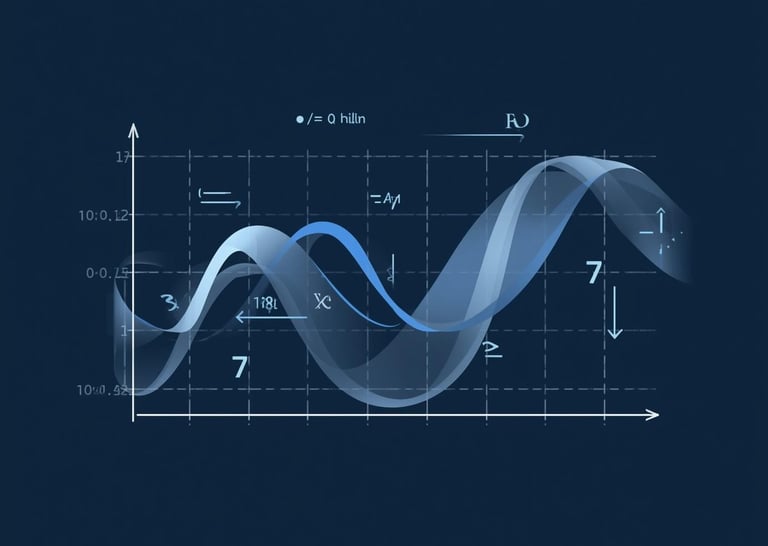
Free logarithm calculator. Calculate ln(x), log₁₀(x), log₂(x), and any custom base logarithm. Solve exponential equations, pH, decibels, half-life, and compound interest. Step-by-step solutions included. No signup needed.
© 2026 Numovix. All rights reserved.
Calculators Categories
Digital & Tech
Converters Categories