

Debt-to-Income Ratio Calculator
INTRODUCTION
You earn $5,000 per month.
Your rent is $1,200.
Car loan is $400.
Credit card minimums are $300.
Student loan is $350.
Total monthly debt: $2,250.
That is 45% of your income gone before you buy groceries.
You apply for a mortgage.
Bank rejects you.
Why? Your DTI is too high.
You apply for a personal loan.
Interest rate is 18% instead of 10%.
Why? Your DTI scared the lender.
Your Debt-to-Income ratio is the single most important number lenders look at — more than credit score, more than savings, more than your job title.
It answers one question: "Can this person afford more debt?"
In 2026, with interest rates fluctuating and lenders getting stricter, knowing your DTI is not optional.
It is essential for every home buyer, car buyer, and anyone who wants a loan.
---
WHAT IS A DEBT-TO-INCOME RATIO CALCULATOR?
A DTI ratio calculator is a tool that measures what percentage of your monthly income goes toward debt payments.
It tells you:
• Front-end DTI — Housing costs only (mortgage, property tax, insurance)
• Back-end DTI — All debt payments combined
• Your loan eligibility — Whether banks will approve you
• How much house you can afford — Before you start shopping
• Financial health score — Are you over-leveraged?
Standard inputs:
• Gross monthly income (before taxes)
• Housing payment (rent or mortgage + taxes + insurance)
• Minimum credit card payments (all cards combined)
• Auto loan payment
• Student loan payment
• Other monthly debts (personal loans, child support, alimony, etc.)
Outputs you get:
• Front-end DTI percentage
• Back-end DTI percentage
• Loan approval likelihood
• Maximum mortgage you qualify for
• How much debt you can safely add
• Comparison to ideal benchmarks
It answers the questions every borrower asks:
"Will I get approved for a mortgage?"
"How much house can I actually afford?"
"Should I pay off debt before applying?"
"Why was my loan rejected?"
---
HOW TO USE THE NUMOVIX DTI RATIO CALCULATOR
Our calculator gives you instant, accurate DTI results in under 60 seconds.
Step 1:
Enter your gross monthly income (before tax).
Example: $5,000
---
Step 2:
Enter your monthly housing payment.
• Rent: $1,200
• Or mortgage + property tax + insurance: $1,500
---
Step 3:
Enter minimum credit card payments (all cards).
Example: $300 ($150 on Card A, $100 on Card B, $50 on Card C)
---
Step 4:
Enter auto loan payment.
Example: $400
---
Step 5:
Enter student loan payment.
Example: $350
---
Step 6:
Enter other monthly debts.
• Personal loan: $200
• Child support: $0
• Alimony: $0
---
Step 7:
Click "Calculate DTI."
You will instantly see:
Example: $5,000 income, $2,450 total debt
• Front-end DTI: 24% ($1,200 housing ÷ $5,000)
• Back-end DTI: 49% ($2,450 total debt ÷ $5,000)
• Status: High — loan approval unlikely
• Recommendation: Pay down $450 debt to reach 43%
---
Example: $6,500 income, $2,000 total debt
• Front-end DTI: 18.5% ($1,200 housing ÷ $6,500)
• Back-end DTI: 30.8% ($2,000 ÷ $6,500)
• Status: Excellent — prime loan rates available
• Maximum mortgage eligible: ~$350,000
---
Example: $4,000 income, $1,600 total debt
• Front-end DTI: 25% ($1,000 housing ÷ $4,000)
• Back-end DTI: 40% ($1,600 ÷ $4,000)
• Status: Moderate — FHA loan possible, conventional may require higher credit score
• Recommendation: Reduce debt by $100 or increase income
---
THE MATH BEHIND DTI RATIO
Understanding the formulas helps you verify results and plan your finances.
---
Front-End DTI (Housing Ratio):
Front-End DTI = (Monthly Housing Payment ÷ Gross Monthly Income) × 100
Monthly housing payment includes:
• Rent or mortgage principal + interest
• Property taxes
• Homeowners insurance
• HOA fees
Example:
$1,200 rent ÷ $5,000 income = 0.24
0.24 × 100 = 24%
---
Back-End DTI (Total Debt Ratio):
Back-End DTI = (Total Monthly Debt Payments ÷ Gross Monthly Income) × 100
Total debt includes:
• Housing payment
• Credit card minimums
• Auto loans
• Student loans
• Personal loans
• Child support / alimony
• Other recurring debt
Example:
$2,250 total debt ÷ $5,000 income = 0.45
0.45 × 100 = 45%
---
Maximum Mortgage Calculation:
Maximum Monthly Mortgage = (Gross Income × 0.43) − Non-Housing Debt
Example:
$5,000 × 0.43 = $2,150
$2,150 − $1,050 (non-housing debt) = $1,100 maximum mortgage payment
At 7% interest, 30-year fixed:
$1,100/month = roughly $165,000 mortgage
---
Target Income Calculation:
Minimum Income Needed = Total Monthly Debt ÷ Target DTI
Example:
You want 36% DTI, have $2,000 debt.
$2,000 ÷ 0.36 = $5,556 minimum monthly income
---
Complete Real Example:
Rahul's Home Buying Journey:
Current Situation:
• Gross income: $6,000/month
• Rent: $1,400
• Car loan: $450
• Credit cards: $250
• Student loans: $300
• Total debt: $2,400
Back-end DTI: $2,400 ÷ $6,000 = 40%
---
Wants to buy a $300,000 house:
• Estimated mortgage + tax + insurance: $2,200/month
• New total debt: $2,200 + $450 + $250 + $300 = $3,200
• New back-end DTI: $3,200 ÷ $6,000 = 53.3%
**Result:** Rejected by most lenders.
---
Option 1: Pay off car loan first
• Car paid off: debt drops by $450
• New total: $2,750
• DTI: $2,750 ÷ $6,000 = 45.8%
• Still too high for conventional, FHA possible
---
Option 2: Increase income + pay credit cards
• Side income: +$1,000/month (total $7,000)
• Credit cards paid off: −$250
• New total debt: $2,200 + $450 + $300 = $2,950
• New DTI: $2,950 ÷ $7,000 = 42.1%
**Result:** Conventional loan approved!
---
Option 3: Buy cheaper house
• $220,000 house, mortgage: $1,600/month
• Total debt: $1,600 + $450 + $250 + $300 = $2,600
• DTI: $2,600 ÷ $6,000 = 43.3%
**Result:** FHA approved, conventional borderline.
Rahul learns: DTI controls everything. Income alone does not matter.
---
DTI RANGES AND WHAT THEY MEAN
| DTI Range | Category | Mortgage Approval | Auto Loan | Personal Loan | Financial Health |
| 0% – 20% | Excellent | Prime rates, any lender | Best rates | Best rates | Very healthy |
| 21% – 36% | Good | Conventional approved | Good rates | Good rates | Comfortable |
| 37% – 43% | Moderate | FHA approved, conventional possible | Higher rates | Higher rates | Tight budget |
| 44% – 50% | High | FHA maybe, conventional unlikely | High rates | Difficult | Stressful |
| 51% – 60% | Very High | Rarely approved | Very high rates | Very difficult | Danger zone |
| Over 60% | Critical | Almost never | Subprime only | Denied | Emergency |
---
LENDER DTI LIMITS IN 2026
| Loan Type | Max Front-End DTI | Max Back-End DTI | Notes |
| Conventional (Fannie Mae) | 28% | 36% | Up to 45% with strong credit |
| Conventional (Freddie Mac) | 28% | 36% | Up to 50% in some cases |
| FHA Loan | 31% | 43% | Up to 50% with compensating factors |
| VA Loan | No strict limit | 41% | Flexible with residual income |
| USDA Loan | 29% | 41% | Rural areas only |
| Jumbo Loan | 25% | 36% | Stricter requirements |
| Auto Loan | N/A | 45% – 55% | Varies by lender |
| Personal Loan | N/A | 40% – 50% | Depends on credit score |
---
WHY EVERY BORROWER NEEDS A DTI CALCULATOR
1. Know Before You Apply
Apply for a mortgage with 48% DTI?
Waste of time. Hard credit inquiry. Score drop. Rejection.
Calculator shows your DTI before you apply.
Fix it first. Then apply. Save credit score.
---
2. Avoid House Poor
You get approved for $400,000 house.
But at that price, your DTI hits 42%.
You can pay the mortgage.
But you cannot save, invest, or handle emergencies.
Calculator shows safe house price, not just approved house price.
---
3. Plan Debt Payoff
Want a mortgage in 12 months?
Calculator shows you need DTI under 36%.
You have $800/month excess debt.
Pay off $9,600 debt in 12 months.
Target set. Plan made.
---
4. Negotiate Better Rates
Walk into bank with 28% DTI.
You are a low-risk borrower.
Negotiate 0.25% lower rate.
On $300,000 mortgage = $15,000 saved over 30 years.
---
5. Catch Lifestyle Creep
Income went from $4,000 to $6,000.
You upgraded car, apartment, subscriptions.
Debt grew faster than income.
DTI stayed at 45%.
Calculator exposes this. Forces honesty.
---
KEY FACTORS THAT AFFECT YOUR DTI
Income Type:
Gross income = before tax.
Lenders use gross, not net.
Side hustle income? Needs 2-year history to count.
Bonuses? Usually averaged over 2 years.
---
Debt Types That Count:
• Credit card minimums (not full balance)
• Auto loans (even 0% interest)
• Student loans (even in deferment, lenders may estimate)
• Personal loans
• Child support / alimony
• Timeshare payments
• Co-signed loans (unless proof other party pays)
Debt types that usually do NOT count:
• Utilities
• Insurance (except homeowners)
• Phone bill
• Gym membership
• Groceries
---
Location and Loan Type:
High-cost area? Some lenders allow higher DTI.
FHA vs conventional? FHA is more forgiving.
Credit score above 740? Lenders may stretch DTI limits.
---
COMMON MISTAKES BORROWERS MAKE
Mistake 1: Using Net Income Instead of Gross
You calculate DTI on $3,500 take-home.
Lender calculates on $5,000 gross.
Your 50% DTI looks like 35%.
Surprise rejection.
Always use gross income.
---
Mistake 2: Ignoring Credit Card Minimums
$10,000 credit card debt.
Minimum payment: $250.
You think: "I pay $1,000/month."
Lender thinks: "$250/month obligation."
DTI calculation uses minimums, not your extra payments.
---
Mistake 3: Forgetting Co-Signed Loans
You co-signed your brother's $400/month car loan.
He pays it. But on your credit report, it is your debt.
Lender counts it.
DTI inflated. Approval denied.
---
Mistake 4: Not Including Future Mortgage
You calculate DTI with current rent.
But applying for mortgage?
Replace rent with estimated mortgage payment.
Your DTI will jump. Plan for it.
---
Mistake 5: Applying With High DTI "Just to See"
Hard inquiry drops credit score 5-10 points.
Rejection stays on record.
Multiple rejections = red flag.
Calculate DTI first. Apply once.
---
Mistake 6: Ignoring Front-End DTI
Back-end DTI is 38% — good.
But front-end is 35% — too high.
Lender rejects anyway.
Both ratios matter.
---
Mistake 7: Not Updating After Income Change
Got a raise? Side income stable?
Recalculate DTI.
You might qualify for better rates now.
---
PRO TIPS TO IMPROVE YOUR DTI RATIO
Tip 1: Pay Off Small Debts First
$200 personal loan. $150 credit card.
Pay them off. Remove $350 from DTI.
Quick wins. Fast improvement.
---
Tip 2: Refinance High-Interest Debt
Credit card at 24% APR, $300/month minimum.
Personal loan at 12%, $200/month payment.
Same debt. Lower payment. Lower DTI.
---
Tip 3: Avoid New Debt Before Big Applications
Buying a house in 6 months?
Do not buy a car. Do not open new credit cards.
Every new payment hurts DTI.
Wait until after mortgage closes.
---
Tip 4: Increase Gross Income
Overtime, bonus, side gig.
$500 extra income = $500 more debt capacity.
At 36% DTI, that is $180/month more mortgage you can afford.
---
Tip 5: Pay Down Credit Cards to Lower Minimums
Credit card minimum is usually 2-3% of balance.
$10,000 balance = $300 minimum.
$3,000 balance = $90 minimum.
Pay down to reduce minimum. Reduce DTI.
---
Tip 6: Consider FHA or VA Loans
Conventional rejected you at 44%?
FHA allows up to 50%.
VA has no strict DTI if residual income is strong.
Explore government-backed options.
---
Tip 7: Use Calculator Before Every Major Decision
Car upgrade? Recalculate DTI.
New apartment? Recalculate DTI.
Side hustle income? Recalculate DTI.
Stay informed. Stay approved.
---
QUICK SUMMARY
Before you use the calculator, remember these key points:
• DTI = Total Monthly Debt ÷ Gross Monthly Income × 100
• Front-end DTI = Housing only (should be under 28%)
• Back-end DTI = All debt (should be under 36% for best rates)
• Conventional loans prefer 28/36, may stretch to 45%
• FHA loans allow 31/43, up to 50% in some cases
• Credit card minimums count, not what you actually pay
• Co-signed loans count against you unless documented otherwise
• Pay off small debts first for fastest DTI improvement
• Do not apply blindly — calculate first, fix DTI, then apply
• Higher DTI = higher interest rates or rejection
• Both front-end and back-end matter — do not ignore either
• Use gross income, not take-home pay
• Recalculate after every income or debt change
---
FREQUENTLY ASKED QUESTIONS
Q1: What is a good debt-to-income ratio?
36% or lower is ideal.
• 20% or below: Excellent — best rates, most options
• 21% – 36%: Good — conventional loans approved easily
• 37% – 43%: Moderate — FHA loans, some conventional
• Above 43%: High — difficult to get new credit
Mortgage lenders especially like back-end DTI under 36%.
---
Q2: Does DTI affect credit score?
No directly.
Credit score does not include income.
But high DTI often means high credit utilization, which does hurt score.
And lenders look at DTI separately from credit score.
You can have 750 credit score and still get rejected with 50% DTI.
---
Q3: Can I get a mortgage with 50% DTI?
Sometimes.
• FHA: Possible with strong compensating factors (high credit score, cash reserves, stable job)
• Conventional: Very difficult
• VA: Possible if residual income is sufficient
• Non-QM lenders: Yes, but rates will be high
Better strategy: Lower DTI first.
---
Q4: Should I include my spouse's income and debt?
If applying jointly — yes.
Joint application = combined income + combined debt.
If one has high income and low debt, other has low income and high debt, combined DTI might be worse.
Calculate both individually and jointly. Choose better option.
---
Q5: Do student loans in deferment count?
Usually yes.
Lenders often estimate a payment (1% of balance is common) or use future scheduled payment.
Even $0 payment plans like SAVE may be counted as a small payment.
Do not assume deferred loans = $0 for DTI.
---
Q6: How fast can I improve my DTI?
Immediately — if you pay off debt.
Pay off a $300/month credit card? DTI drops instantly.
Increase income? Only counts when stable and documented (usually 2 years for side income).
Fastest way: Pay off or refinance to lower monthly payments.
---
Q7: What debts are not included in DTI?
• Utilities (electric, water, gas)
• Phone and internet bills
• Car insurance
• Health insurance
• Groceries and dining
• Entertainment subscriptions
• Gym memberships
Only recurring debt obligations count.
---
RELATED CALCULATORS
Explore our full suite of free financial tools:
• Mortgage Calculator
• Loan Affordability Calculator
• Credit Card Payoff Calculator
• Refinance Calculator
• Budget Calculator
• Savings Goal Calculator
• Net Worth Calculator
• Emergency Fund Calculator
• Rent vs Buy Calculator
---
FINAL THOUGHTS
Your DTI ratio is a number.
Just a percentage.
But it controls your financial life.
It decides:
• Whether you get a home
• What interest rate you pay
• If you can buy a car
• Whether banks trust you
A 45% DTI does not mean you are bad with money.
It means you are over-leveraged.
And lenders fear over-leveraged borrowers.
The DTI calculator makes this invisible number visible.
It shows you where you stand.
It shows you what needs fixing.
It shows you the exact path to approval.
Before you apply for any loan — mortgage, auto, personal, anything — calculate your DTI.
If it is too high, fix it.
Pay off debt. Increase income. Wait.
Then apply.
One minute with the calculator can save you months of rejection.
That is how you buy smart.
That is how you borrow smart.
That is how you build wealth instead of just paying debt.
---
DISCLAIMER
This article is for educational and informational purposes only.
DTI requirements, lender policies, and loan programs change frequently and vary by lender, location, and individual circumstances.
The examples provided are illustrative and based on approximate 2026 lending standards in the United States.
Actual loan approval depends on:
• Your specific credit score and history
• Lender overlays and requirements
• Loan type and amount
• Down payment size
• Employment stability
• Cash reserves
• Current market conditions
Always verify current DTI requirements directly with lenders, mortgage brokers, or financial advisors before making borrowing decisions.
Numovix does not provide financial, legal, or lending advice.
Our calculator results are estimates and should be verified with professional guidance before making any financial commitment.
Loan terms and regulations vary by jurisdiction — consult local laws and qualified professionals regarding your specific situation.
Debt-to-Income Ratio Calculator | Calculate Your DTI & Loan Eligibility | Numovix
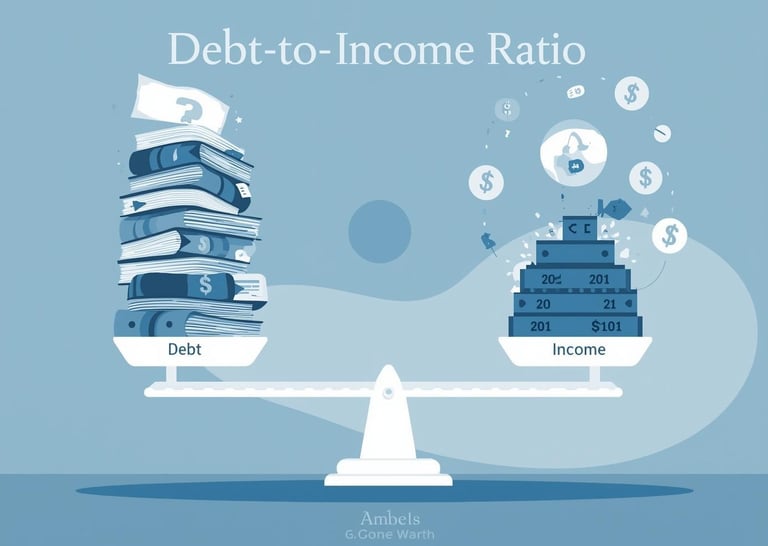
Free DTI ratio calculator. Calculate your debt-to-income ratio instantly to know your loan eligibility, mortgage approval chances, and financial health. No signup needed.
© 2026 Numovix. All rights reserved.
Calculators Categories
Digital & Tech
Converters Categories